
Each of the 5,000-plus patent models in Hagley’s collection represents a unique and creative solution to a particular problem at a very specific time in history. Take for instance, how to get corn kernels off an ear of corn quickly and effectively.
I had some experience with this. Thanks to a family history of a condition known in the vernacular as “Summer Teeth” (some are here, some are there), my children needed orthodontic intervention at a very early age. Not to fret, we eventually got everything straightened out, quite literally. But that led to some dietary restrictions such as no gum, sticky candy, or sunflower seeds. It also meant that sweet, delicious summer corn could only be enjoyed when cut from the cob.
Enter Amazon. I purchased several inexpensive tools. None were as effective as a sharp knife but reduced the chances that I might cut off a finger (again). Maybe I should have picked up one of these instead—A. H. Patch’s Patented Black Hawk Corn Sheller.
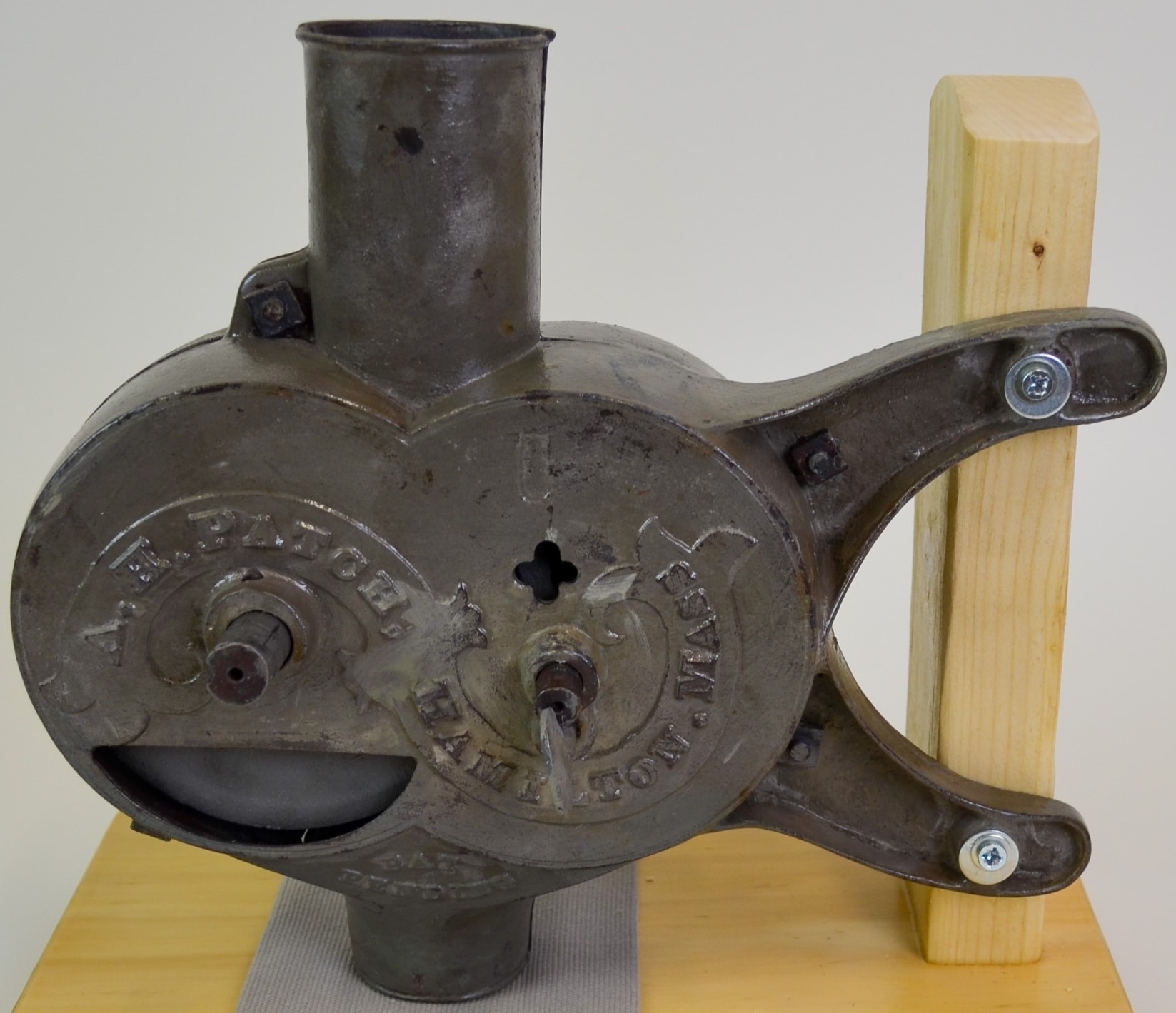
Patented on the Fourth of July (you know, when the corn is “knee high”), Patch’s sheller mounted to a vertical pole or even a barn support beam. The cob was inserted into the top of the machine. A hand crank powered discs with many rows of cast iron teeth that rapidly removed the kernels and ejected the cob. Patch’s later machines could be attached to a box to catch the kernels. Many images and several videos can be found online showing how the machine worked.
Was there demand for such a machine? You bet! Corn was a critical staple of the American diet. Not only could corn be eaten right off the cob but be milled into flour and meal. It also served as feed for the livestock that turned that corn into eggs, milk, and meat. But removing dried corn kernels from the cob was hard work. The cobs were beaten or scraped with tools. There had to be a better way.
While we turn to computers, the internet, and AI as potential problem solvers today, nineteenth century Americans turned to machines. The mindset amidst the Industrial Revolution was that machines were the remedy for all of life’s frustrations. Revolutionary manufacturing processes produced machines that made long, laborious tasks like shelling corn faster, safer, and easier. Starting in the 1830s, inventors patented many designs for this process. In fact, by the time Patch invented this one, over 350 other devices were already patented.
Asahel Huntington Patch (1825-1909) grew up on a farm in Hamilton, Massachusetts. Farm life was not for him, and he later recounted how much he hated shelling dried corn by hand. He trained as a machinist and worked at a factory that made agricultural implements, including corn shellers, in Worcester, Massachusetts. In the mid-1850s, he relocated to Louisville, Kentucky where he worked in another factory and earned his first patent for a finger bar arrangement on harvesting machines. After the Civil War, he moved back to Massachusetts where he earned three more patents, two for corn shellers, including this one. His other patent model is in the collection of the Smithsonian Institution.
When it came time for Patch to patent his machine, he selected Munn & Company to represent him. They published Scientific American magazine and offered professional services to many clients during this Golden Age of Invention. In fact, they were directly responsible for handling over 100,000 patents, more than any other firm.
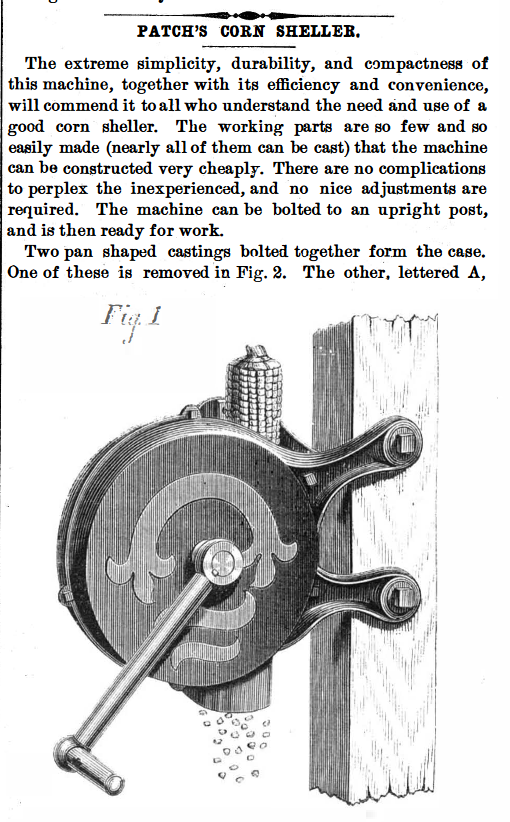
In exchange for paying for their services, the magazine often ran features on their client’s patents—Patch’s included. Here is what they had to say about Patch’s second design for a corn sheller in May 1872.
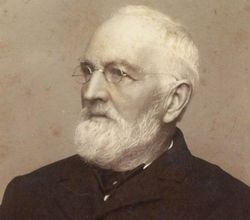
Despite the publicity, none of his early inventions brought him notoriety or success. In 1875, he and Kentuckian William Douglas Meriwether, Jr. (1837-1930) purchased the Southern Agricultural Implement Works in Clarksville, Tennessee and he was named its superintendent. He started inventing again and in 1886, at age 61, he patented another corn sheller. This design finally caught on. The sheller, and other improvements he patented on it afterwards, was dubbed the Black Hawk Corn Sheller and sold an estimated one million units worldwide. He continued inventing earning his final patent a few months before he died. His wife and children founded their own company to keep manufacturing his inventions and it operated until 1955. A historical marker in Clarksville stands at the site of the factory.
This model entered Hagley’s collection thanks to the generosity of Sandra Smith Nadel. Her husband, Alan S. Nadel, worked as a patent attorney in Philadelphia. He studied chemistry at George Washington University where he also earned his law degree in 1976. He captained the men’s crew team, becoming the first rower inducted into the school’s Athletics Hall of Fame. He also served as a staff sergeant in the U.S. Army Reserves.
Along the way he collected several patent models. In his memory, his family donated two of those models to Hagley, including this corn sheller, this past December. I highlighted his other model for a cleaning tool in an article earlier this summer. Thanks again to Sandra and her family for adding to Hagley’s patent model collection!
Be sure to visit this patent model through this summer near the entrance to Nation of Inventors, Hagley’s permanent exhibit celebrating American invention and innovation featuring over one hundred patent models.
Chris Cascio is the Alan W. Rothschild Assistant Curator, Patent Models at Hagley Museum and Library.