
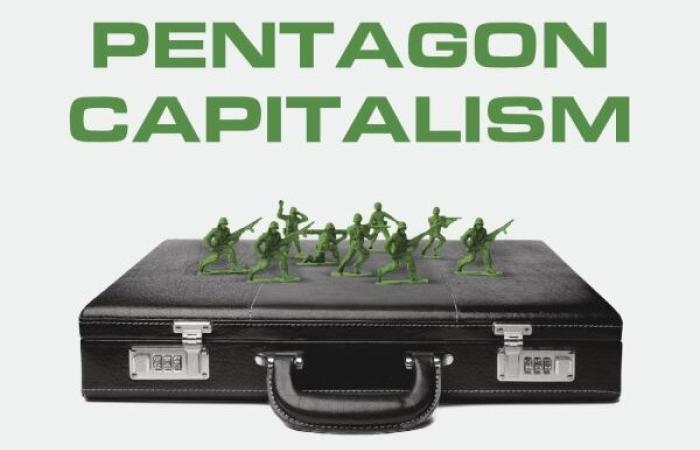
Pentagon Capitalism: How the Cold War US Military Modeled Itself on Private Business
In an interview conducted by Roger Horowitz (Hagley Center Director), Muphy explains how leaders of the defense bureaucracy looked to private industry for inspiration. They reasoned that since the military now resembled a huge industrial conglomerate, it should be run like a business. The services even engaged management consultants to establish officer-training academies modeled on the Harvard Business School.
After the Vietnam War, many military leaders pushed back, questioning “managerialism” and calling for a return to traditional concepts of command. Civilian critics also chimed in, protesting the callousness of the business-minded secretary of defense, Robert McNamara, who famously measured success and failure in body counts. By this time, however, the language and values of management had thoroughly infiltrated the military’s institutional structure and daily operations. As Murphy makes clear, the reorganization of the defense bureaucracy along the lines of a for-profit firm durably altered the experience of military work and facilitated the lasting privatization of US national security.
Murphy made extensive use of Hagley collections in his research, and received financial support from two Hagley grants: the Henry du Pont Dissertation fellowship (2016) and the Lou Galambos Fellowship in Business and Politics (2018-19). Currently he is assistant professor of history at Brandeis University.
To make a donation underwriting this program and others like it please visit our donations page.