
During the month of October, mystery lurks around many corners. At my workspace, an obscure publication emerged from the shadows of our backlog, where "FOPs" often hide: things Found On Property that lack the usual provenance and accession records. Establishing context for such works can be both challenging and fun for catalogers. The undated title at hand is A l’Y grec: Delastre, Marchand Mercier-Quincailler, rue de la Huchette, No. 18 (At the Greek Y: Delastre, Haberdasher and Hardware Merchant, Rue de la Huchette, No. 18). This document is called a broadside. The small single sheet (23 x 18 cm) has a title with fully justified French text inside of a decorative border.
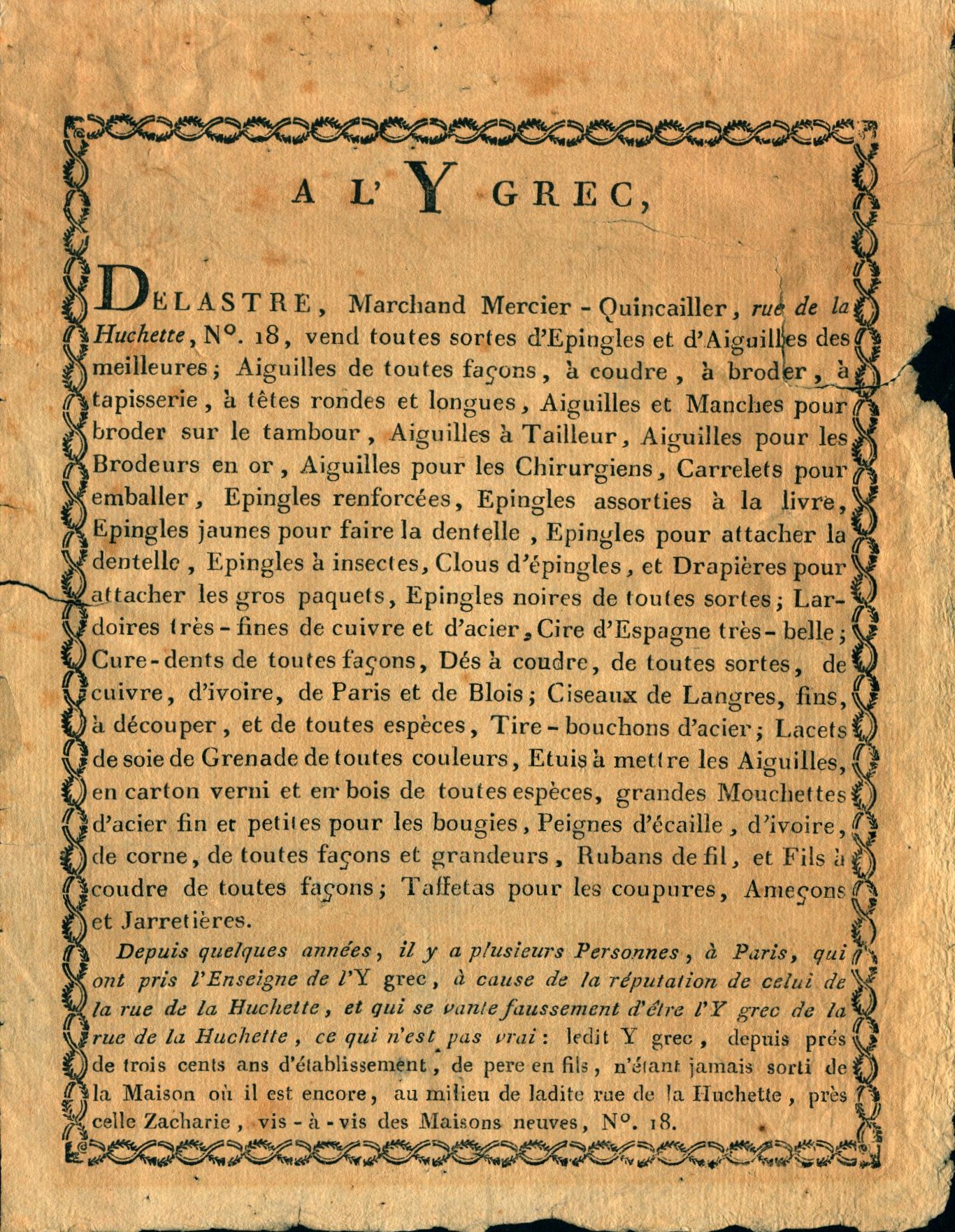
Noting discoloration on the front and paper hinges attached to the back, I consulted Hagley conservators. They confirmed that this piece spent some time under a mat, perhaps hung on the wall of a former owner. They also detected evidence of treatment to stabilize a tear. Much to my delight, they noticed small pinholes punched through the top of the leaflet.
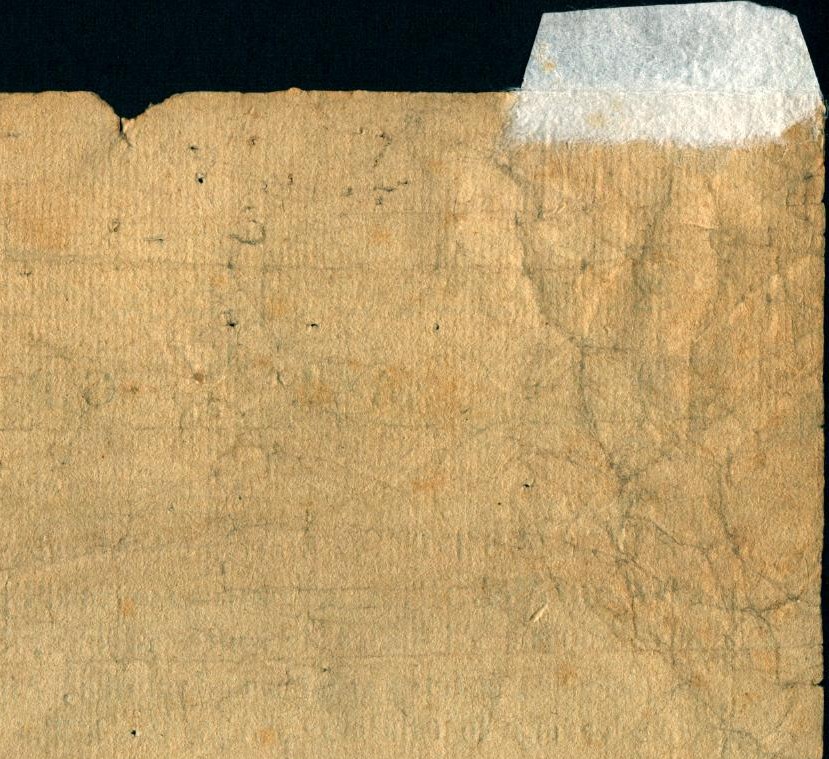
Why do pinholes matter? The document is an advertisement issued by a member of the merchant guild and a distributor of fashion accessories and fasteners. For generations, the Delastre family staked a solid claim as the premier source in Paris for the finest pins and needles made in the Normandy town of Aigle. Imagine this petite sheet tacked to a board or otherwise pierced with samples from the vendor! French speakers linked their catchy sign of the Greek Y, L’Y-grec, with the sound-alike “lie-grègues,” known in English as aglets. Aglets modern equivalent are found on the ends of shoelaces. Once upon a time, haberdashers stocked such metal-tipped laces for tying the bottoms to the tops of menswear.
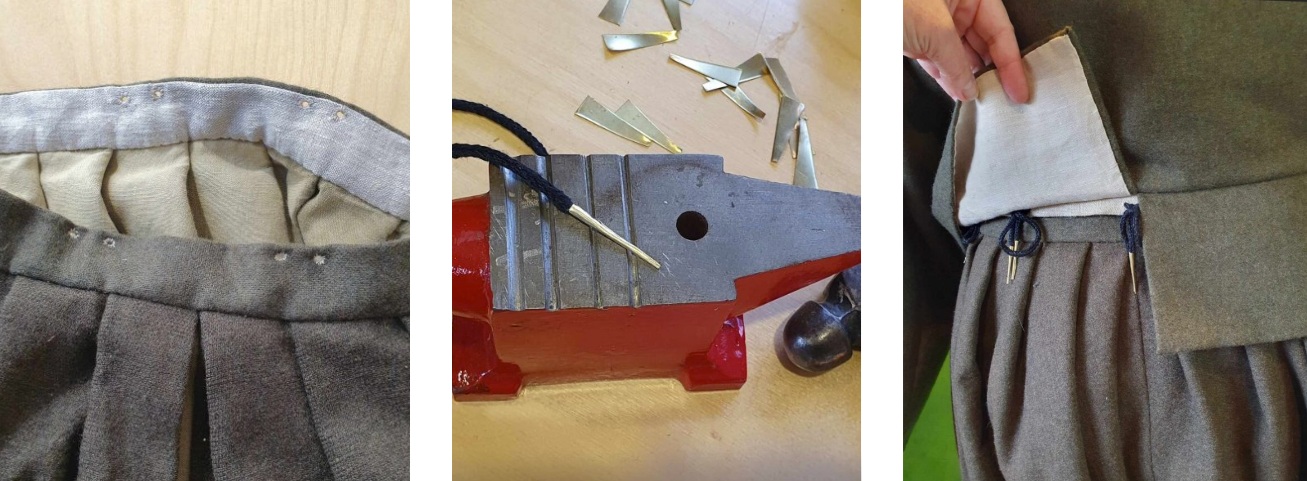
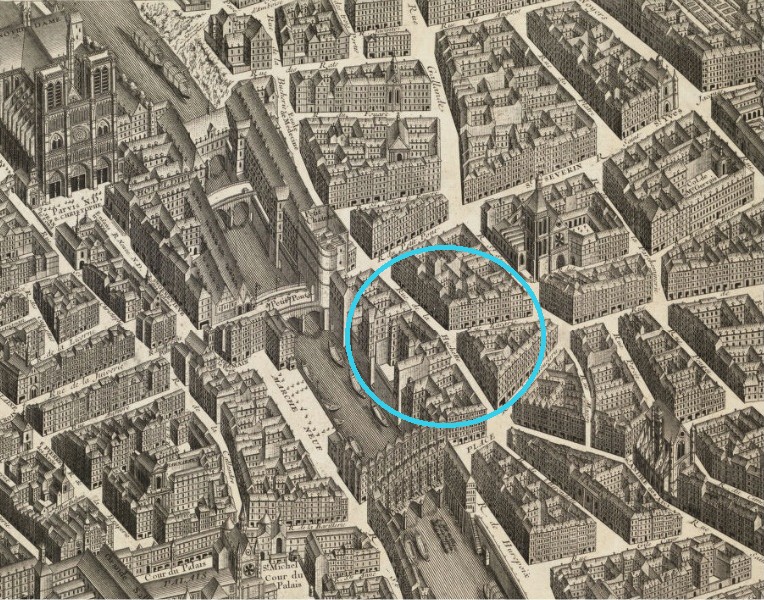
The trademark may be a carryover from the Renaissance, but the aglet lends an air of anachronism to this flyer. We believe that Delastre had it printed sometime in the eighteenth century, prior to the French Revolution, when guilds were abolished. Our estimate is based partly on internal references to fads such as tambour embroidery and insect pins, and partly on records that confirm Delastre’s location, which is mapped below on the left bank of the Seine, opposite Notre Dame Cathedral.
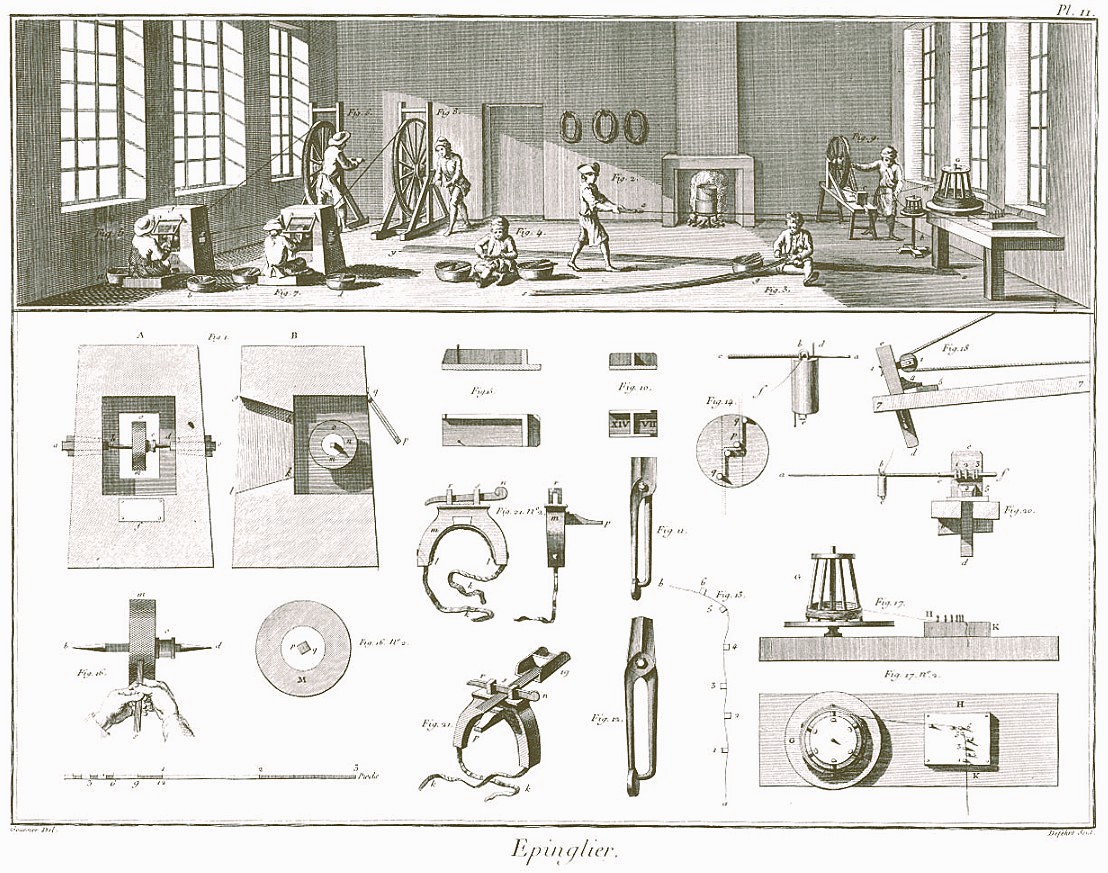
The pin trade famously served the Scottish economist Adam Smith as a vivid example of the division of labor in The Wealth of Nations (1776). Smith did not originate the concept but his pin-factory illustration made it famous. His description resembles the article “Épingle” in Diderot and d’Alembert’s Encyclopédie (below), which is considered one of his likely sources.
Does the recently 'rediscovered' broadside in Hagley's collection pre-date the Wealth of Nations? Or the Diderot Encyclopédie? As I ponder these questions at the sign of the Greek Y, I ask, why not?
We invite you to explore Hagley collections on the history of business through our online catalog, finding aids database, and digital archives.

Alice Henderson Hanes is the Technical Services Librarian at the Hagley Museum and Library.