
Salespoint was a sales training program created in 1965 by Frank Siedel and his Cleveland-based corporate scriptwriting firm, Storycraft, for the Westinghouse Corporation.
Using compact cassette recorders — then a brand-new technology originally meant for office dictation — Siedel produced monthly 60-minute audio programs that salespeople could listen to in their cars as they drove between appointments. Scripts were written, professionally narrated and recorded, duplicated onto hundreds of cassettes, and mailed out on a subscription basis. The program ran for at least ten years. B.F. Goodrich and Nordson Corporation later adopted the model for their employees.
Its mobility, direct delivery to listeners, and inventive use of new technology make Salespoint a legitimate ancestor of the modern podcast.
Oral histories conducted with Cinecraft and Storycraft employees who worked on the Salespoint program provide an invaluable source for telling the Salespoint story. The following is a narrative produced using interviews with Robert Schneider, Nancy (Bartko) Schneider, and Jon Siedel.
The idea for Salespoint emerged from several electrical power outages. The first was in June 1961 which caused a power failure across five square miles of midtown New York on one of the hottest days of the year. The city’s mayor at the time, Robert Wagner, placed blame for the outage on faulty Westinghouse equipment. Then the Northeast Blackout occurred on November 9, 1965, which affected parts of Ontario, Connecticut, Delaware, Maryland, Massachusetts, New Hampshire, New Jersey, New York, Pennsylvania, Rhode Island and Vermont. The blackout left over 30 million people without power for up to 13 hours. Months later, it was determined that human error caused the failure.
Fearing bad publicity for the company following the 1965 blackout, Westinghouse called an emergency meeting to prepare their salespeople with talking points about the outage. One Westinghouse executive pushed for the usual response: a letter or bulletin to the field. Siedel objected and asked for two weeks to find a better solution.
A few days later, browsing a hardware store, Siedel spotted a display for the Norelco Carry-Corder 150 — a compact, book-sized cassette recorder new to the U.S. market. He bought several and put his writers to work building a sales communications package around them.
At the follow-up meeting, the same executive again pressed for a letter. Siedel asked someone to retrieve the contents of a Pittsburgh salesperson's mailbox. With the volume dumped onto the conference table in a pile, Siedel's point made itself: "I don't think you need another piece of mail to deal with this crisis." Siedel then played a Carry-Corder based Salespoint demo tape. The 60-minute recording covered industry news, competitive intelligence, customer negotiations, and company updates — and Siedel also proposed adding a segment featuring tips from top salespeople. Each month, a new tape would arrive by mail. The salesperson would listen during his daily travels between customers.
The team approved a regional test in the Southeast in February 1966. Survey results were strong: most recipients played the tape the day it arrived, listened more than once, and did so primarily in the car. After only a few weeks, Westinghouse skipped further testing and rolled Salespoint out nationally to all 300 division salespeople. Siedel personally went to the Netherlands, the headquarters of Norelco, to arrange for the quantity purchase of more Carry-Corders.
The program’s ongoing success revolved around not only a grueling production process but an intense cycle of research, writing and revisions. Harry Freer was the lead Salespoint writer for about 10 years. Jim Siedel, Frank’s son, was involved early on and is credited for creating the program’s iconic chimes musical signature.
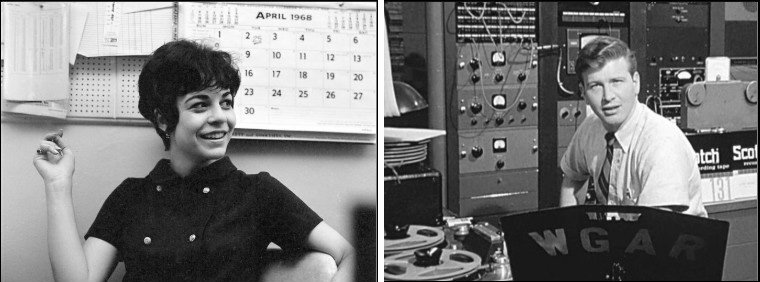
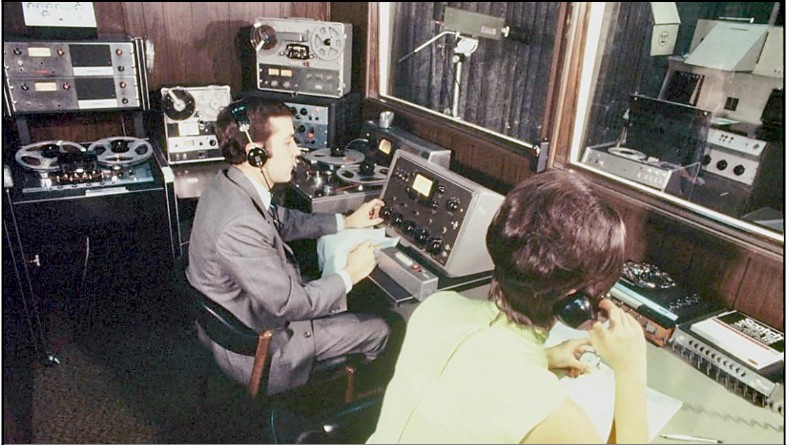
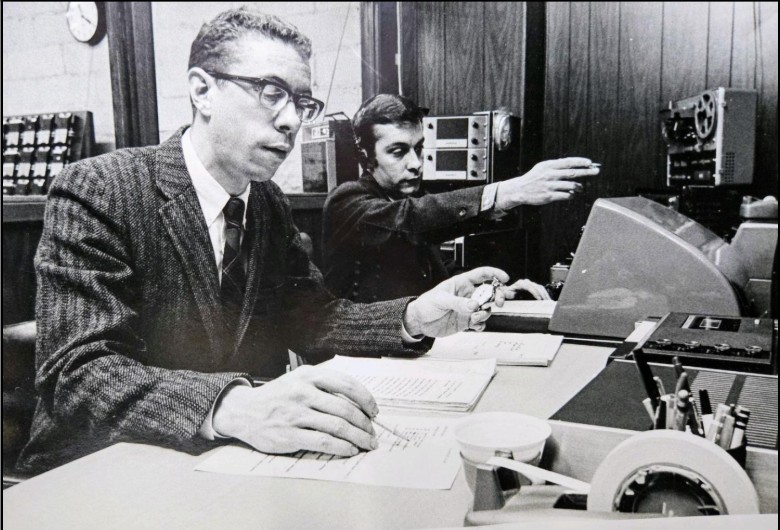
The first Salespoint episodes were recorded at Cinecraft Production’s sound studio and duplicated by a cassette tape producer in Detroit. In mid-1969, when Storycraft moved to expanded offices in Lakewood, Ohio, they took over the complete production process which included writing, recording, duplicating, and distributing the tapes. Jon Siedel, Frank’s son, was tasked with the responsibility of creating a brand-new audio production facility and served as its recording engineer.
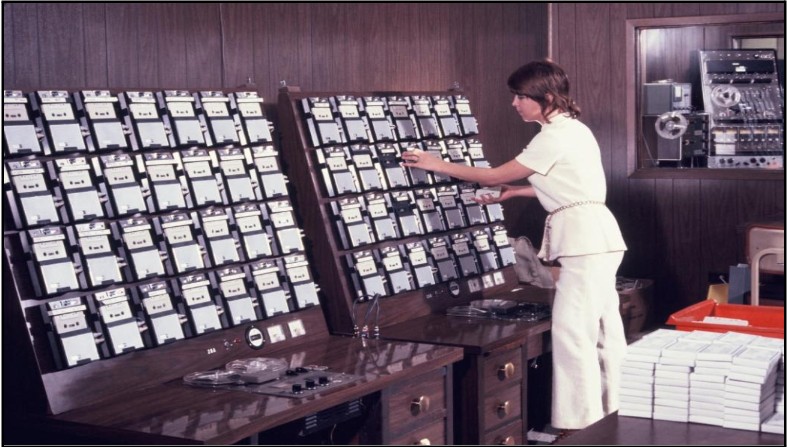
Because the concept was so new, production required significant labor and inventive use of technology. Storycraft built a duplication system at their Lakewood location using a wall of Carry-Corders mounted to boards. After the used cassettes were returned, inspected and erased, an operator loaded a clean cassette into each machine, hit play on the master recording, and let it transfer in real time — flipping all cassettes at the 30-minute mark to record Side B.
Salespoint ran for more than a decade and quietly spread to other companies, signaling a shift in how corporations thought about reaching employees in the field. The program worked because Siedel understood something simple: salespeople spent hours in their cars, and a new technology — the cassette tape — turned those hours into an opportunity. In 2026, podcasting has made niche audio programs ubiquitous, but in 1965 audio programming "on the go" arrived as a novel and groundbreaking idea.
A big thanks to Nancy Schneider, Bob Schneider, Jon Siedel, and Jim Culley who made invaluable contributions to this article. I encourage you to listen to the oral histories recorded with the Schneiders and Mr. Siedel:
Remembering Frank Siedel with Jon Siedel and Jim Culley
Interview with Nancy and Bob Schneider
Additional sources:
The Cleveland Press, "A MECHANIZED SALES PITCH – June 22, 1966
The Register, Kirk Wells, "SALES PROMOTION IN SPOTLIGHT," July 11, 1966
The New York Times, June 21, 1961
Kevin Martin is the Chief Curator of Library Collections and Andrew W. Mellon Curator of Audiovisual and Digital Collections