
Thanksgiving consistently ranks as one of the top American holidays. No gifts, no costumes, no fireworks, just family and friends gathered together for a big meal. Whether it’s a traditional turkey dinner or something a bit unconventional like lasagna or a sushi buffet, Thanksgiving is a holiday that anyone can celebrate.
Everyone has a favorite dish. Though my grandmother’s stuffing occupies the most real estate on my plate, mashed potatoes consistently rank at the top of many surveys as a preferred side. Here is a patent model in Hagley’s collection that represents a never-ending war against a pesky potato pest that to this day threatens to keep the noble spud from traveling from the farm field to our holiday dining tables
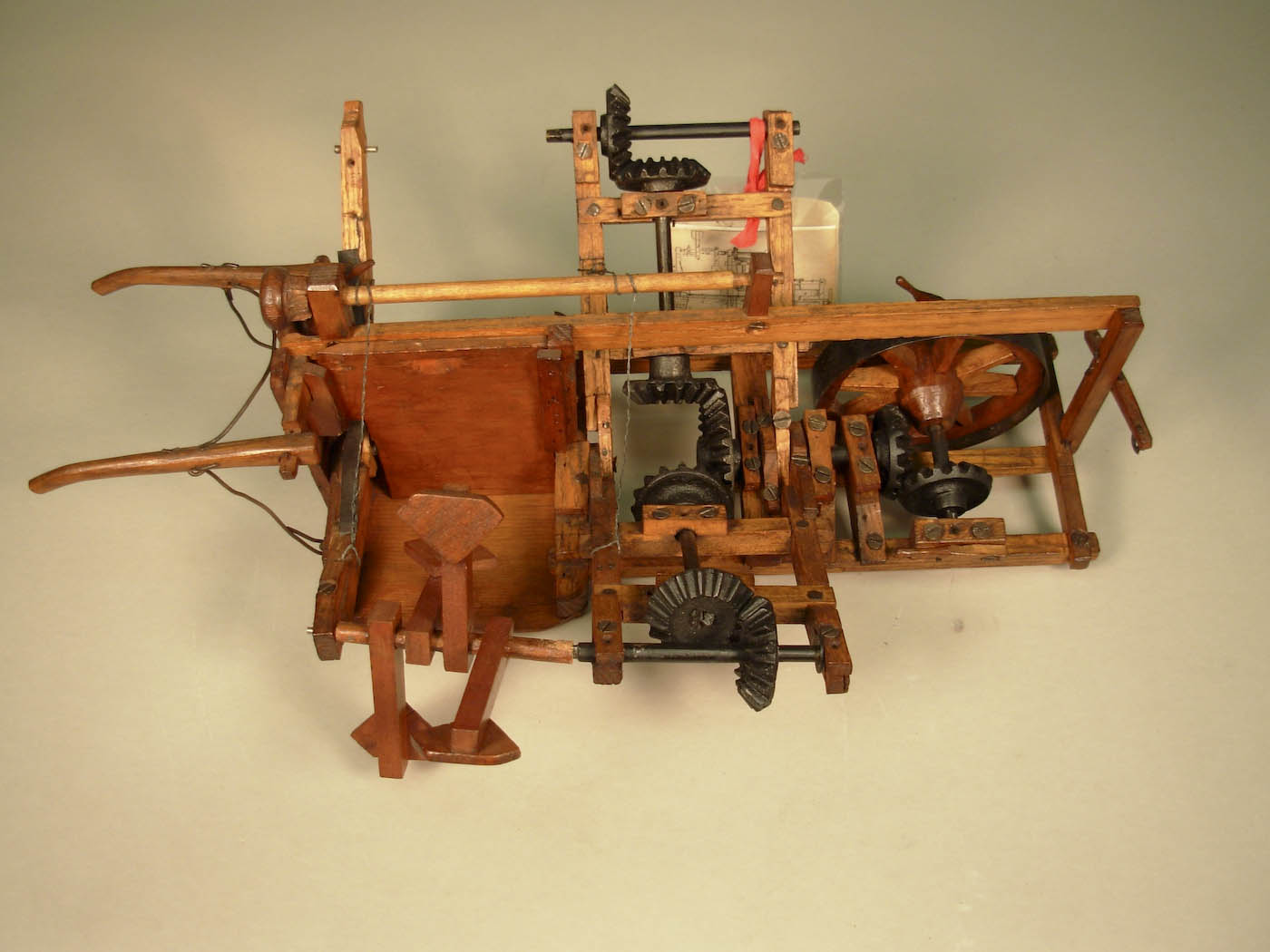
The inventor stated in his patent application that “[t]he object of this invention is to furnish a new machine for removing bugs from potato vines and catching them, so that they may be so readily destroyed.” As the user pushed the machine, the front wheel drove gears that spun rotating paddles. These paddles knocked the bugs from the potato vines and deposited them on the platform below for collection. Below is a patent drawing that gives a better view of the four-bladed, airplane propeller-like paddles on both sides of the machine:
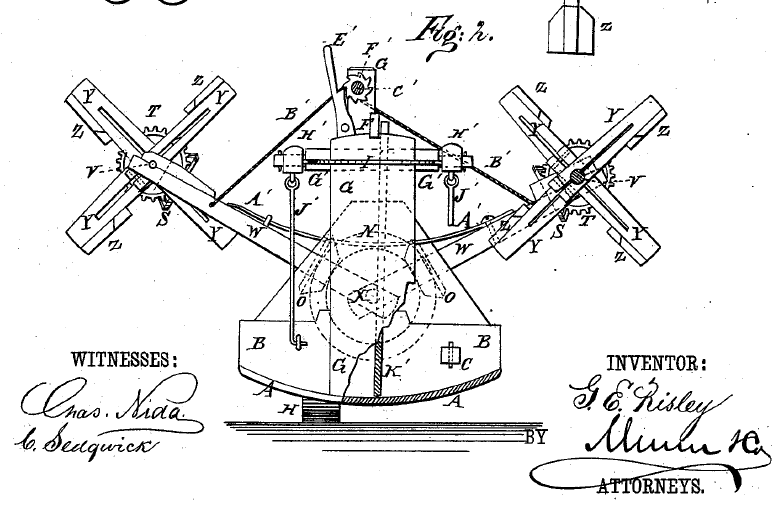
The inventor, Goodrich Elizur Risley (1832–1895), was born deaf, as was his wife and four of his children. That did not prevent him from becoming a successful farmer, carpenter, and joiner. This machine won a $50 prize from the New York State Agricultural Society in 1879. During a “Potato Beetle Destroyer” competition, his machine collected 80 pounds of potato bugs. He was bested by another machine that collected 98 pounds. That’s a lot of bugs!
Were potato bugs a problem? A big one! According to the Potato Museum’s website (yes, it’s a thing), the Colorado potato beetle (Leptinotarsa decemlineata) began migrating eastward in the late 1850s, devastating any potato crop in its path. Not even water could stop them. They clung to ships, cargoes, and even floating debris to cross the Detroit River and Lake Erie. By 1872, newspapers in the inventor’s native New York state reported their appearance in Buffalo. Two years later, they reached the Atlantic Ocean. That didn’t stop them either. By the end of the decade, they had made their way to Europe.
At first, local birds, who considered the bugs delicious snacks, kept the population under control. As the infestation got worse, farmers turned their own chicken and turkey flocks loose to feast on the insects. The flocks could not keep up either, so gangs of men, women, and children picked the bugs off by hand and killed them by drowning them in kerosene or boiling water.
Hundreds of newspaper columns offered advice. Most recommended the application of pleasant-sounding but highly toxic insecticides like London Purple and Paris Green. The formula for the latter included both powdered copper and arsenic. The only creatures harmed by these pesticides were the people who worked in or lived near the potato fields. The chemicals were easily absorbed through the skin and lungs, and ingested through drinking water.
The great potato bug infestation even influenced popular culture. Women purportedly wore yellow and black striped clothing mimicking the bugs. A popular mandolin carried by itinerant musicians, which resembled the bugs’ yellow-striped bodies, became known as the “tater bug mandolin."
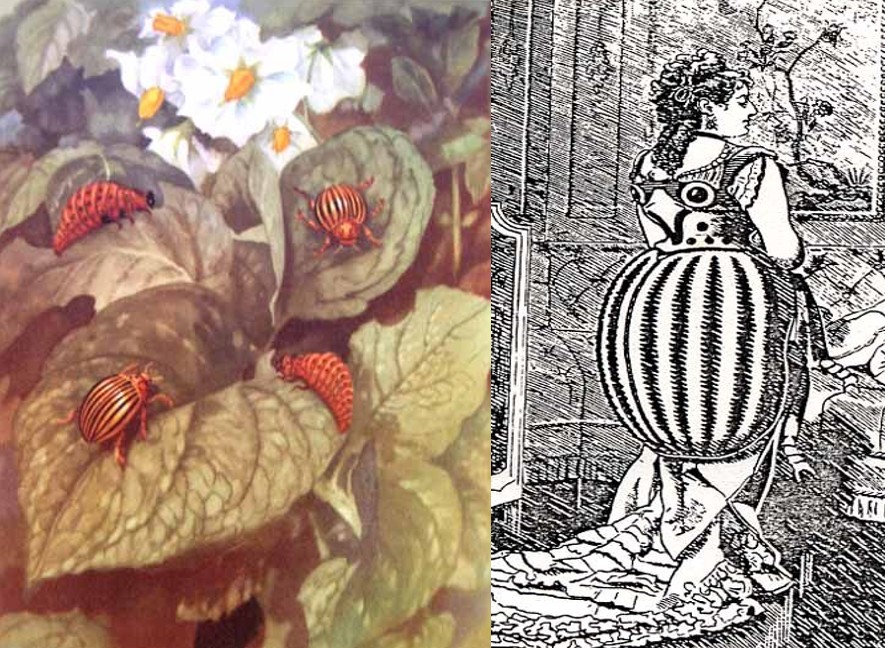
Source: https://potatomuseum.com/growing-potatoes
During the Golden Age of Invention, Americans believed that any problem could be solved by some machine or mechanical process. Inventors patented many devices to fight the potato bug. While the earliest patent I found was issued in 1868 (patent #80,458), over the next decade alone, ninety patents were granted for inventions related to controlling potato bugs. Renowned New York newspaper editor and publisher Horace Greeley declared, “Man is bigger than the potato bug, he will master it.”
Sorry, Mr. Greeley, but your prediction was overly optimistic. Even today, the bugs can be controlled but not conquered. The pesticide DDT worked…for a while. The insects quickly developed immunity. Well into the mid-twentieth century, schoolchildren in both Europe and the U.S. were excused from class so that they could handpick bugs in the fields, and they were encouraged to continue doing so through the summer break. One American poem captured their thoughts on the subject:
“There must be some special reason for weeds
And potato bugs and such,
Maybe God made them so that boys
Wouldn’t mind going back to school as much”
Considering the impact of the potato bug, not to mention the potato blight that caused the Irish Potato Famine, it’s a miracle that mashed potatoes arrive on our Thanksgiving plates at all! Perhaps we all could pause and remember the tireless efforts of farmers, scientists, inventors, and schoolchildren alike before piling on that second helping of pulverized spuds. Or third. And don’t forget those day-after leftovers! Happy Thanksgiving, everyone!
Chris Cascio is the Alan W. Rothschild Assistant Curator, Patent Models at Hagley Museum and Library.