
The FAIC (Foundation for Advancement in Conservation)/Tru-Vue Conservation Grant provided essential materials and funding to complete the conservation of three miniature model rooms and prepare them for display.
Hagley Museum and Library holds the archive of William Pahlmann & Associates, a leading 20th-century design firm. Pahlmann and his team designed interiors for restaurants, department stores, and chic homes. They also shaped popular taste through partnerships with home furnishing brands and through Pahlmann’s syndicated newspaper column. The archive includes three miniature model rooms: The Forum of the Twelve Caesars, Manhattan Room for an Explorer, and Bed-Sitting Room & Dressing Room. Pahlmann’s team designed the models, and the accomplished Chicago artist and miniaturist Eugene Kupjack built them with meticulous care. Made in the late 1950s, the models toured the United States to promote the work of interior designers.
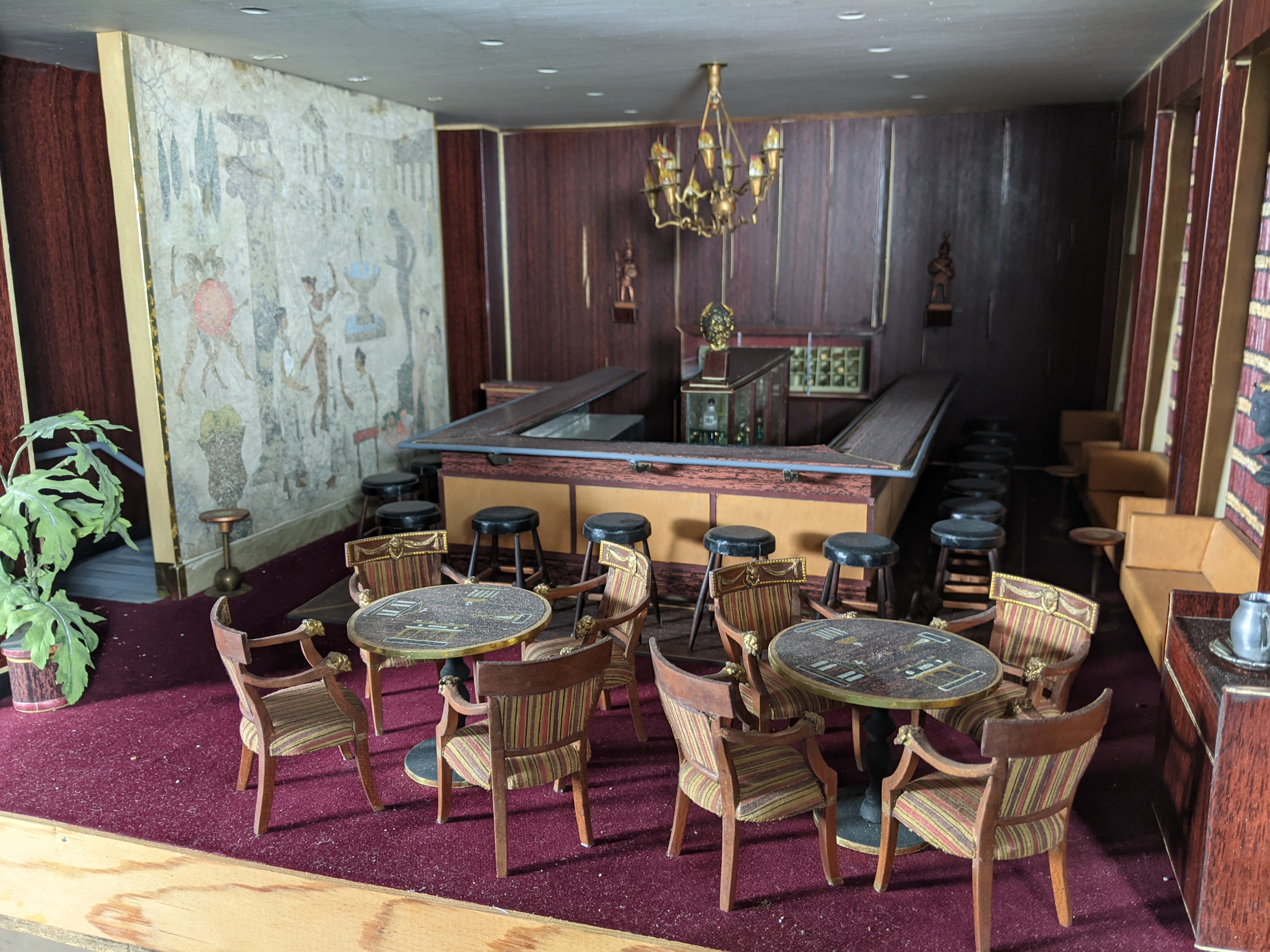
The models are made from a wide range of materials, including wood, leather, vinyl, cloth, plastic, metal, ceramic, and paper. The Forum depicts a restaurant with a bar area and a dining room, divided by a stair hall suggested by trompe-l’oeil painted steps. This model needed the most conservation work. It contains hundreds of tiny components assembled inside a wooden crate six feet long. Its original glass front had broken at some unknown date, probably during shipping, and shards had fallen into the dining room, scratching surfaces and scattering fragments. Decades of storage had also left dust on the tiny dining tables and bar stools, dulling their fine details.
To make the rooms sparkle again, conservators cleaned each model from top to bottom using small cotton swabs, makeup sponges, and erasers. They made sticky swabs by dipping swabs in an adhesive with a low glass transition temperature, which dried to a tacky surface that could lift loose particles. They also vacuumed the models with custom-made miniature attachments designed to reach into the smallest spaces.
Each model was originally lit with incandescent bulbs that imitated either sunlight or banks of recessed lights. In one model, the bulbs were shielded by asbestos matting. For health and safety, conservators coated the matting thoroughly with a polymer emulsion to keep the fibers contained. Because incandescent bulbs pose both conservation and fire risks, they were replaced with new LED lights.
Since the original glass had caused so much damage, the team wanted a shatter-resistant acrylic replacement. They also wanted it to be anti-reflective, so visitors could fully appreciate the models’ details. Hagley was fortunate to receive the FAIC/Tru-Vue Grant, which provided a large sheet of acrylic glazing and funded new lighting and other exhibition components, such as signage and mounts. The 6 mm Optium Museum Acrylic was recommended because it also offers dimensional stability, which mattered because the opening on The Forum of the Twelve Caesars is more than five feet long.
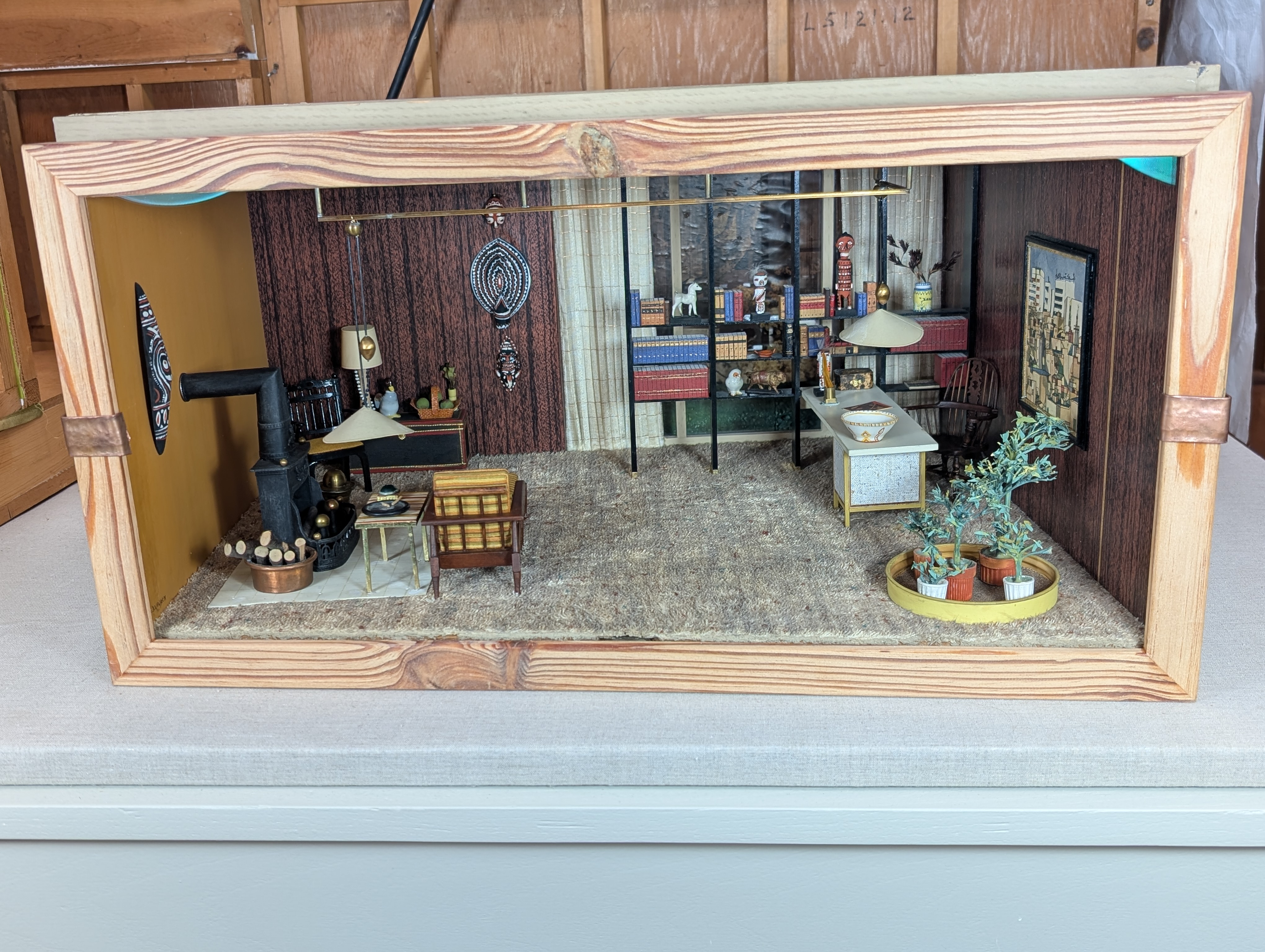
Once the Tru-Vue glazing was installed in all three models, the difference was obvious. The exhibition space had several light sources, including windows, which could have caused distracting reflections on ordinary glass or acrylic. The Optium Museum Acrylic performed perfectly, giving a clear view into the models with no color shift or glare. It is nearly invisible, which creates the illusion that you could reach right into the rooms. Preparing the glazing took very little work because the surface arrived clean and free of defects. During the exhibition it needed little maintenance, since it did not attract or hold dust.
Hagley is grateful for the support of the FAIC/Tru-Vue Grant and for the anti-reflective technology of Optium Museum Acrylic, which allowed the miniature rooms to shine.
Laura Wahl is the Library Conservator at Hagley Museum and Library