
Welcome back to another Hagley Staff Favorites article! Every quarter, we share stories from our collections staff, giving you the opportunity to hear from the experts—the people who first lay hands on our archives and objects—about the items that made a mark. We hope you find something new to investigate!
This quarter's Staff Favorites interviewee is Jordan Barrett, the Parkinson Project Cataloguer at the Hagley Library, speaking about the Patrick M. Parkinson Collection of the History of American Banking.
Q: What is your role here at Hagley?
A: I am the Parkinson Project Cataloguer here at Hagley.
Q: How do you engage with the materials Hagley collects?
A: I work hands-on with the Patrick M. Parkinson Collection of the History of American Banking, creating bibliographic records for the Library’s catalog. Cataloguing provides information such as the author’s name, book titles, and subject terms that describe resources, which helps researchers find the materials they need.
Q: What is one of your favorite collections?
A: The Patrick M. Parkinson Collection of the History of American Banking of course!
Q: Why does this material stand out to you?
A: The Parkinson collection covers American banking history and banking theory from 1780 to approximately 2009. It includes books, serials, pamphlets, ephemera (such as newspaper clippings), manuscript material (such as bank ledgers and letters), and even a single sheet of sheet music. At first glance, I thought the topic would be most interesting to people with a finance background, but there is a variety of materials, and quite a few are humorous.
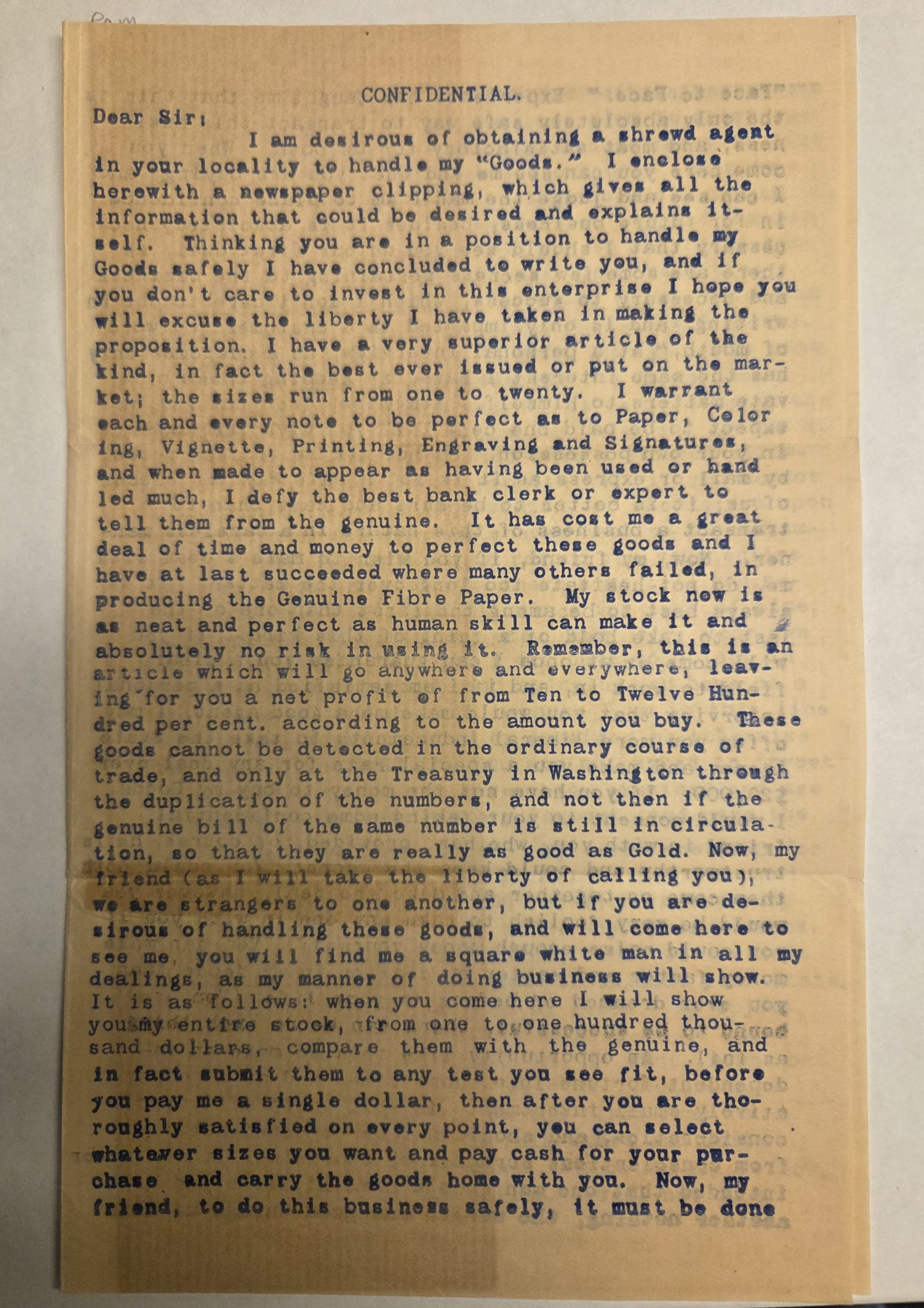
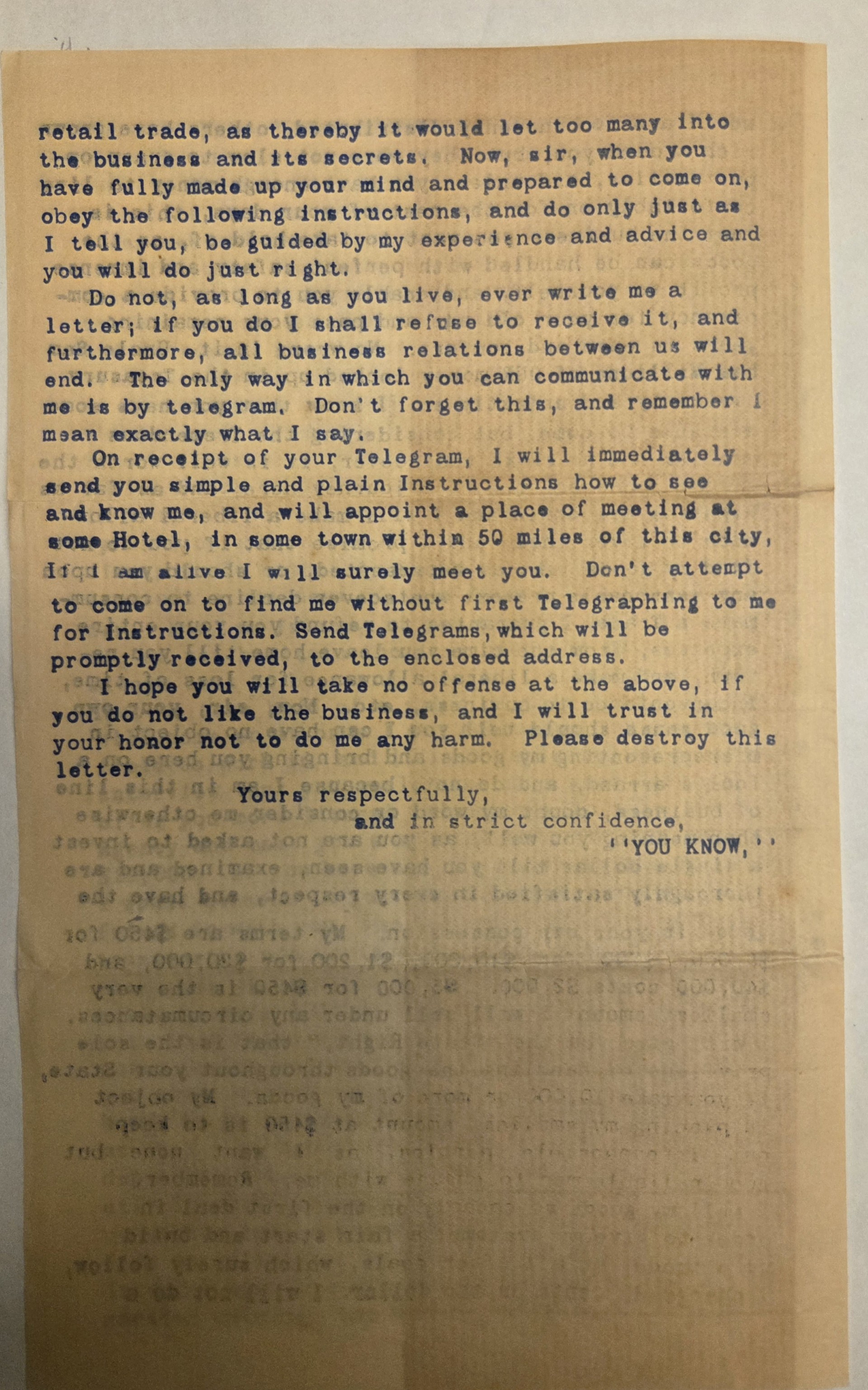
What I’ve enjoyed working with and learning about are the counterfeit bill detectors and the variety of banknotes in the collection. During the 1800s, individual banks could print their own banknotes, which made counterfeiting easier. In the collection is a direct appeal from a counterfeiter seeking someone to distribute "goods," signed by “You know" (Pam 2025.0375). The fact that someone was brazen enough to advertise their counterfeit wares and sign it “you know” gave me a little chuckle and highlighted why so many counterfeit detectors were needed. See the appeal below:
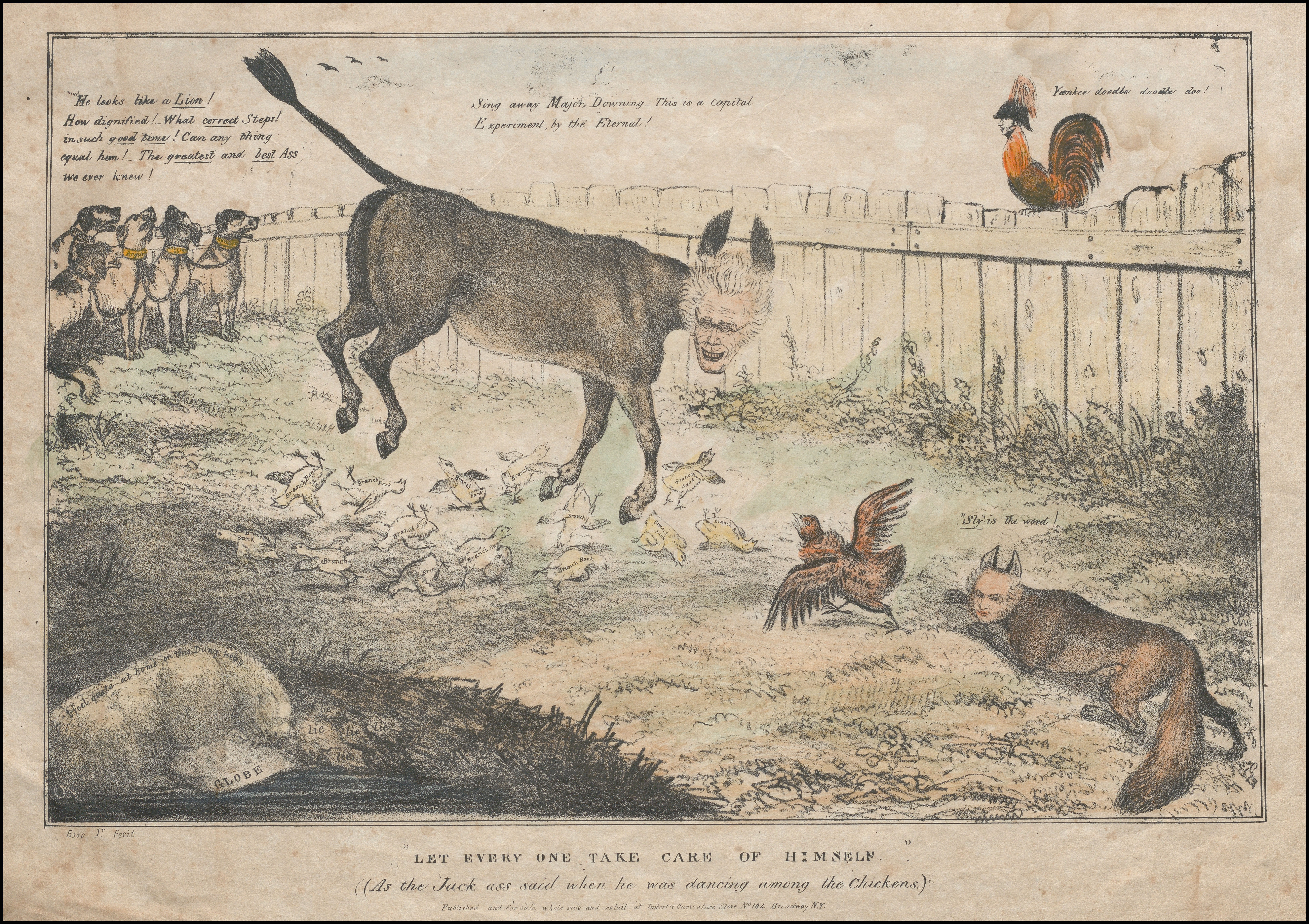
Another item that I enjoyed was a political cartoon titled “Let every one take care of himself”. The cartoon is an attack on Andrew Jackson’s plan to distribute treasury funds, previously held by the Bank of the United States, to “branch banks” in various states. The artist drew the face of Andrew Jackson on a donkey dancing among chickens that represent the branch banks. Martin Van Buren is also included as a sly fox. The imagery is both humorous and a little odd. Every time I start a new box, I find something I wasn’t expecting. See the cartoon below:
To browse the contents of the collection we have cataloged so far, click the following link Patrick M. Parkinson Collection of the History of American Banking or you can search the Hagley online catalog. For more information on using Hagley collections, please reach out to our Reference Services staff at askhagley@hagley.org.
Hannah Spring Pfeifer is the Library Coordinator and interviewer for Staff Favorites at Hagley Museum and Library