
As I write this, Delaware is experiencing its coldest winter in decades. I look forward to a quick spring break trip with the family to a more tropical location in March. Sun, sand, and perhaps a frozen tropical drink sound like the proper remedies.
A frozen tropical drink? How did frozen daiquiris or pina coladas become associated with a climate with no snow or ice? When did ice first arrive in the tropics? You’ll be surprised to learn it was long before mechanical refrigeration. It is an interesting story that, of course, ties into a patent model in Hagley’s collection. I wouldn’t be writing this if it didn’t!
It starts with Frederick Tudor (pictured, right).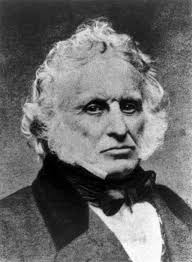 He grew up in New England where ice from its many lakes and ponds was harvested in the winter to preserve food as well as chill drinks and desserts during the summer. Born into a wealthy family, he had little motivation or need to go to school or pursue a career. That did not stop him coming up with schemes that could build upon his family’s fortune.
His ice dreams were first kindled by a trip with his brother to Havana, Cuba. His brother suffered from tuberculosis and hoped his symptoms could be eased by the change in climate. Not surprisingly, the Yankees found the tropical heat and humidity quite unbearable! They longed for a refreshing beverage chilled by the contents of their family’s own private icehouse. Tudor sensed an opportunity.
His motivation was a classic one—find a way to ship material that is cheap and abundant in one place to another place where it is scarce and desired. He just had to figure out how to get it from pond to punchbowl before his investment literally melted away. And he did not have the slightest idea how.
Naturally, he sought investors from friends and family amongst his fellow New England elite. Many declined. In fact, his brother-in-law wrote that “the idea was considered so utterly absurd by the sober-minded merchants as to be the vagary of a disordered brain.”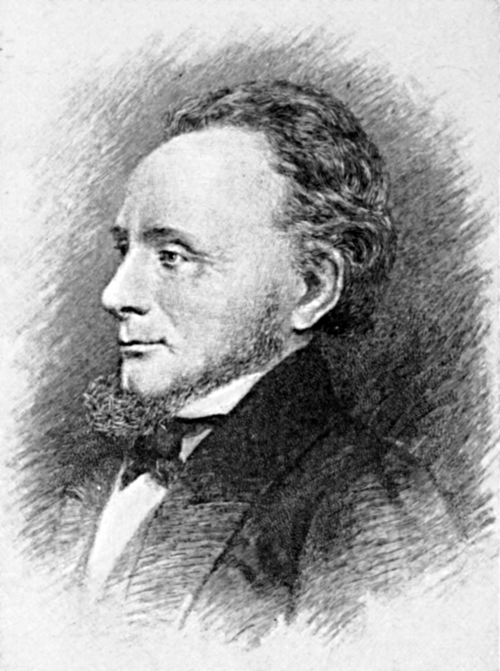
Undeterred, Tudor spent many years trying to prove those doubters wrong. He lost thousands of dollars on his first shipment to Martinique in 1806. Subsequent voyages were also unsuccessful. He was arrested three times and jailed for his debts twice.
The man who eventually made Tudor’s dream a reality was the foreman of his operation named Nathaniel Jarvis Wyeth (pictured, right). Wyeth’s innovations made the harvesting, preservation, and shipment of pond ice possible on an industrial scale.
His father, Jacob Wyeth, operated the Fresh Pond Hotel in Cambridge, Massachusetts. Built in 1796, the hotel still stands and is on the National Register of Historic Places. Winters in New England were harsh so there was less work to do around the area’s farms other than tending livestock, cutting firewood, mending fences, and the like. Some, like the Wyeth’s, filled that time by harvesting ice on bodies of water like Fresh Pond.
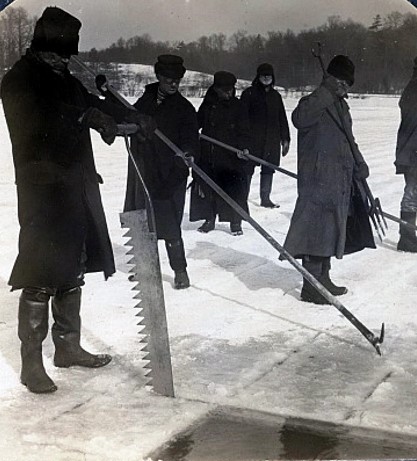
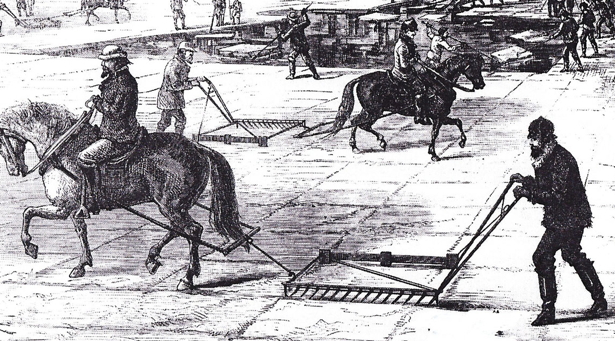
One of the tools Wyeth developed was a sled that made cutting ice faster and easier and used less manpower. Hagley owns the patent model for his design, and it is pictured below.
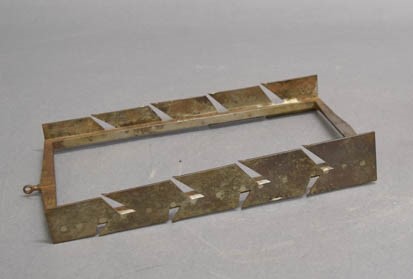
This invention replaced the dangerous and physically exhausting hand-operated saws and increased efficiency by using horsepower over manpower. Wyeth’s sled had two rows of cutters, one on each side, each with different depths. The shorter cutting blades were used on the first set of passes. Once flipped over, the second, deeper set finished cutting the blocks.
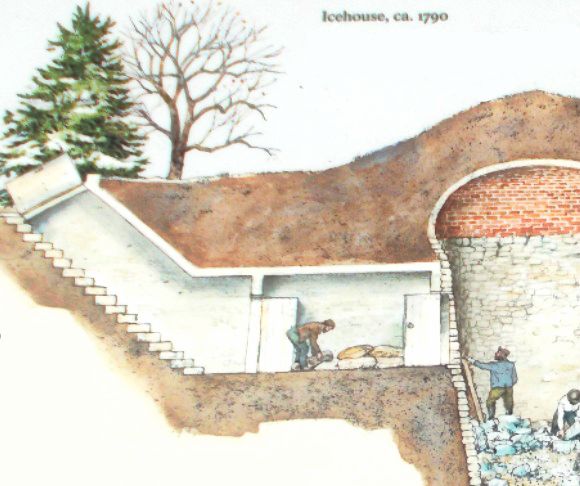
Wyeth's greatest contributions, however, were his improvements on storing the ice after harvest. Previously, ice was stored in masonry or brick structures sunk into the ground. These were expensive and time consuming to excavate, difficult to access, and had limited capacity.
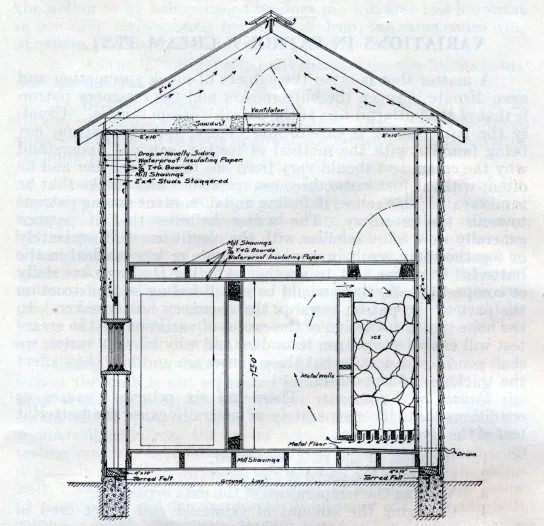
Wyeth designed an above-ground structure of wooden framing which was less expensive and faster to build than masonry. He added a vented pitched roof to allow warmer air to rise and escape as well as a drain in the floor to remove any water that accelerated melting. He added an interior wall with a gap between it and the exterior wall. He then filled it, and any gaps in the flooring spaces, with insulating sawdust. Mountains of sawdust accumulated at local sawmills so owners were happy to have him haul it away. His innovations helped reduce any ice loss to about ten percent.
Tudor began building ice houses based on Wyeth’s design all up and down the east coast. Ship builders likewise constructed hulls using similar insulation to prevent melting during transport. Now all he had to do was to get people to buy it.
While Wyeth had the technical knowledge, Tudor was a born salesman. He claimed that “[a] man who has drank his drinks cold can never be presented with them warm again.” He gave demonstrations on how to make ice cream to confectionery shop owners. He marketed his own designs for cooling jugs and household-sized iceboxes. He sold ice subscription plans that varied from two deliveries a day to once a month.
Americans soon developed an ice addiction. Jugs of chilled water, refreshing lemonades, and cheap “penny licks” of ice cream were affordable to even those of modest means. One woman who reminisced about her visit to America in the 1840s recalled that ice, so rare and expensive in her native England, was her greatest luxury. She warned any haters, “Whenever you hear America abused, remember the ice.”
Overseas shipping companies warmed to Tudor’s cooling concept and made ice a very hot global commodity. Thousands of tons left New England ports for markets as far away as London, South America, India, and, yes, the Caribbean. The frozen water trade made Tudor piles of cold hard cash. He became known as the “Ice King” of New England.
He owed much of this success to Wyeth, who earned over a dozen patents for ice harvesting tools and technology. His entry in the Dictionary of American Biography states that “[I]t was said at his death that practically every implement and device used in the ice business had been invented by Nat Wyeth.”
Chris Cascio is the Alan W. Rothschild Assistant Curator, Patent Models at Hagley Museum and Library