
Imagine being supremely confident in your fastidiousness; in believing that your personal sanctuary, including your bedroom, held enough cache to serve as background for a published fashion shoot.
William Pahlmann did it repeatedly. And in 1958, Daren Pierce and Jack Hartrick of William Pahlmann Associates were convinced (or persuaded?) to allow the Detroit News fashion editor, photographer, and models into their New York City apartments.
In a letter suggesting these locations, Hartrick’s place was described as traditional, while Pierce’s had a “very gay color scheme and many interesting accessories.” His personal collection of owl figures and artworks are conspicuous in these fashion shoots.
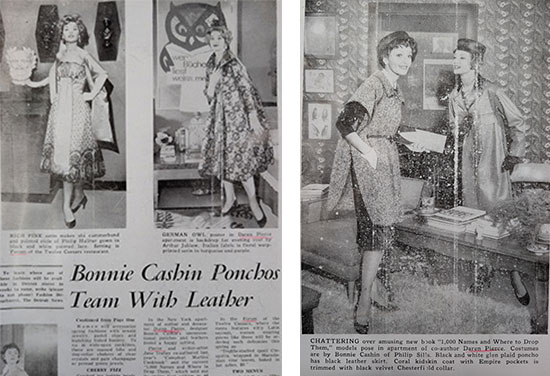
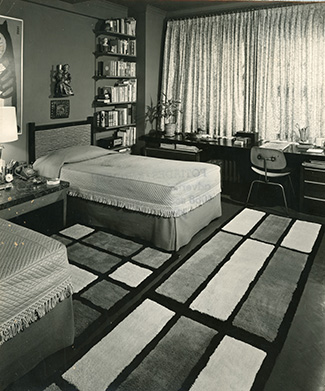
The 1958 shoot featured attire by Bonnie Cashin, a revolutionary fashion designer. She was part of the web of creatives connected to William Pahlmann Associates. Cashin was known for simply shaped tunics, capes, and coats of woven fabrics or colorful suede with leather and fur accents. Her garments were made for women who wanted to be both stylish and practical. Cashin was among the designers who supported the Woolworks embroidery shop in New York, founded by Daren Pierce and partner Inman Cook. On the left edge of the photo below of Daren’s bedroom you can see the edge of the owl poster that appeared behind a model in the fashion shoot above.
William Pahlmann was a master promoter, using any means of calling attention to spaces he had a hand in designing. He was also a gregarious host, evidenced by photographs of costumed soirees held at his homes. At these events, Pahlmann brought together staff, friends, collaborators, and clients. Photographs and correspondence with textile designers Tammis Keefe and Dorothy Wright Liebes show how his professional and personal connections were closely linked.
Beginning in the 1940s, Pahlmann began using the textiles of Liebes (14 October 1897 – 20 September 1972). Liebes’s first studio was in San Francisco, and one of her weavers was none other than Pahlmann Associate Daren Pierce. Liebes used color masterfully, and panels of her creations glittering with strands of Lurex were commonly used as window shades and upholstery.
From the 1950s through the 1970s, fashions by Cashin included hooded jersey tops layered with coats and laced leather pants and adjustable skirts. The heyday of Pahlmann Associates coincided with the era of high-brow in-home cocktail parties. A Cashin line for the well-to-do hostess used Liebes woven upholstery fabrics as aprons and skirts. These could be chosen to coordinate with matching pillows.
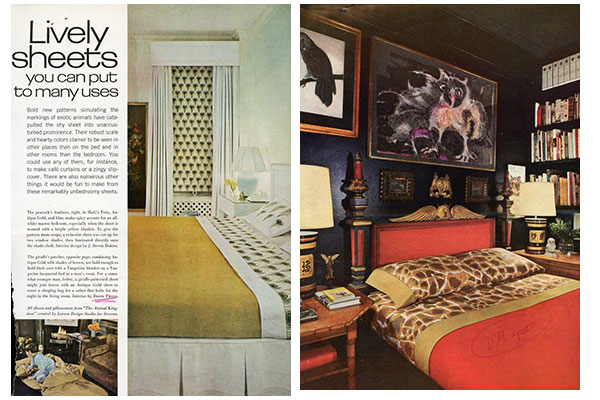
Speaking of pillows, Pierce’s apartment also shows up in magazine spreads that highlighted animal-themed bedding sets. Once again, his owl collection features prominently and appropriately! The “Lively Sheets” magazine article below credits Daren Pierce as the designer for the room décor. On the right, this dramatic owl artwork over the bed of Daren Pierce might elicit nightmares for some.
To see Liebes and her designs created with DuPont fibers, including blinds used in the apartment of William Pahlmann, see this video in Hagley’s William Henry Radebaugh film collection.
For more about the William Pahlmann Associates, please come to Hagley and visit the exhibit Innovation in Miniature in the Library, on display through March 2026. The exhibition was possible due to a generous Foundation for Advancement in Conservation (FAIC)/Tru Vue® Conservation and Exhibition Grant and in-kind support of Optium Museum Acrylic glazing for preservation of this work provided by Tru Vue, Inc. and Grewe Plastics.
Laura Wahl is the Library Conservator at Hagley Museum and Library