
A selection of items from Hagley's extensive collection of unique archives about the history of the invention and innovation of television.
“On top of the world,” 1931
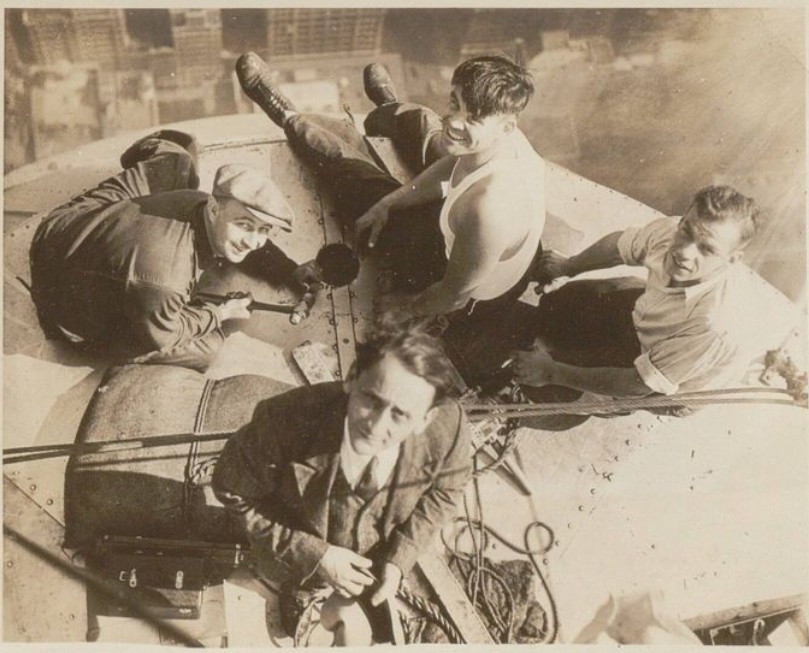
These brave souls installed the first experimental television antenna on the Empire State Building in New York. The antenna was remodeled and replaced several times before NBC began regular commercial television in the New York area in 1939. See more images of the Empire State Building antenna installation from 1931.
Photograph from the Records of other RCA divisions (Accession 2464.80)
Television goes public, 1939
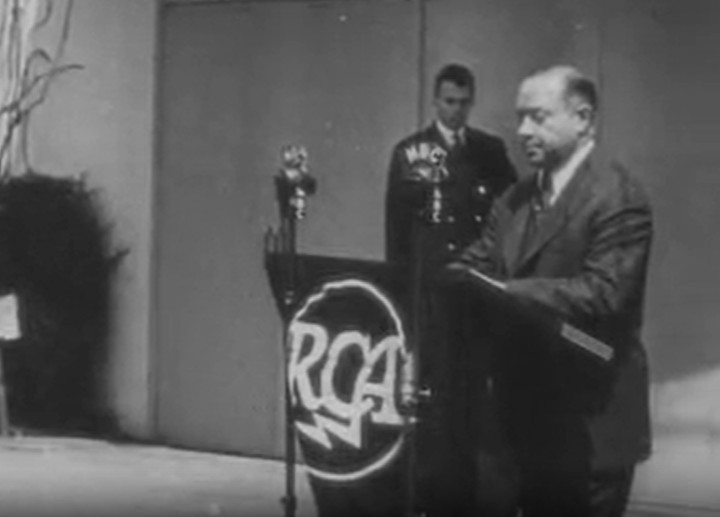
David Sarnoff, president of Radio Corporation of America (RCA), which owned NBC, seen here introducing television to the American public on April 20th at the 1939 New York World’s Fair. Watch a film produced by RCA in 1964 that features the address by Sarnoff from the 1939 Fair.
Photograph from the David Sarnoff papers (Accession 2464.55)
Schedule for Station W2XBS experimental television program, c. 1940
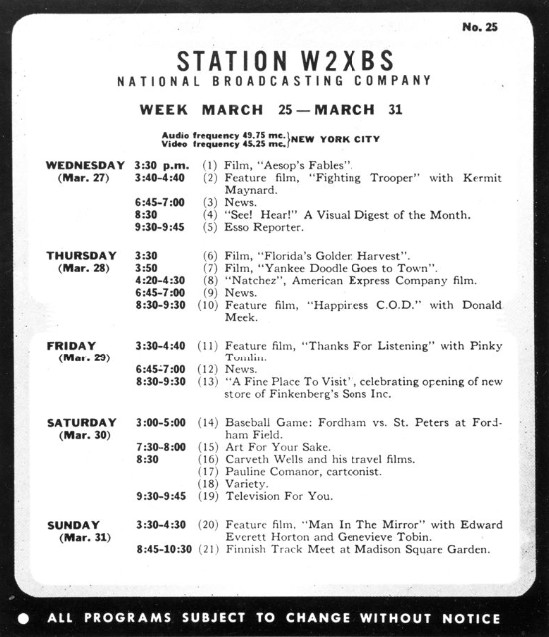
One of the first programming schedules for television. View more photographs related to station W2XBS.
Schedule from from the RCA News and Information Department photographs. Accession 2464.68)
Betty Goodwin, TV’s first announcer, 1938
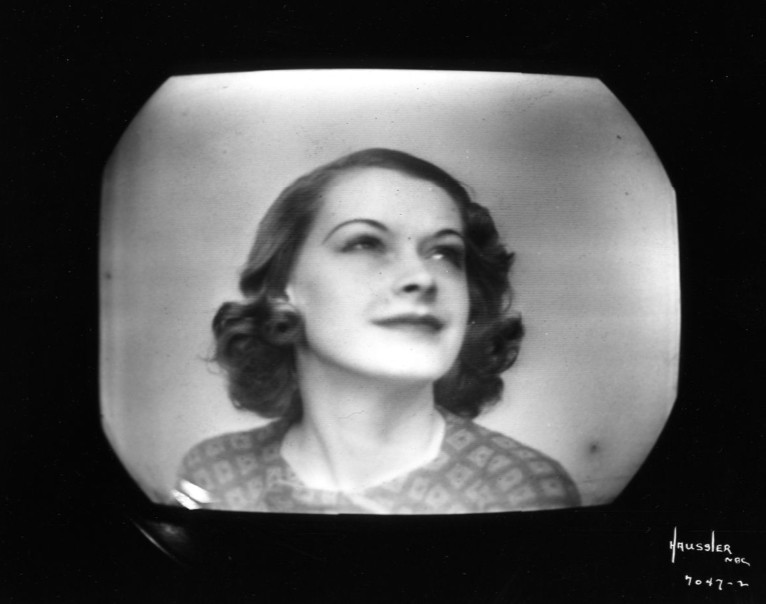
In 1937, Betty Goodwin stepped into the role of announcer for NBC’s experimental television studio in New York’s Rockefeller Center. Due to Depression-era cutbacks, she had lost her previous job as a writer with the Seattle Times after getting married. The first show aired for RCA license holders. In an interview, Betty Goodwin recalled of the NBC experimental studio: "The lights were so hot. Finally, I said, 'Look, I can't do this, I'm getting blisters on my cheeks.' I got them a mannequin I named Miss Patience. We gave her a whole wardrobe, and she did their testing. She was my real contribution to television. They could experiment with all different shades of makeup on her without having her burn up under those lights.” From: The Box: An Oral History of Television from 1920-1961, by Jeff Kisseloff. See more images of early television from RCA.
Photograph from the RCA News and Information Department photographs (Accession 2464.68)
“How Large-Screen Television Works” diagram, circa 1949
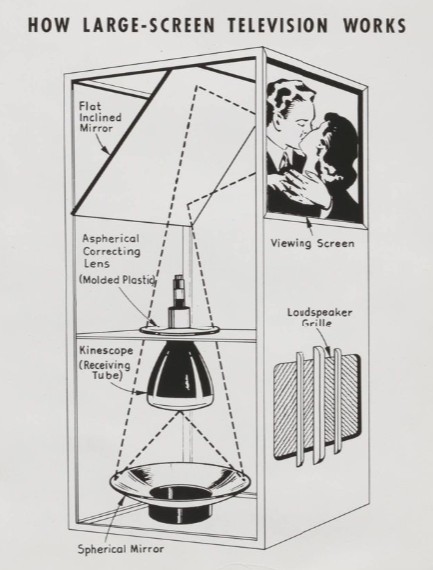
While iconoscope tubes made television cameras work, cathode-ray tubes (kinescopes) allowed receivers to display the image for the viewer. View the image in the Hagley Digital Archives.
Diagram from the RCA News and Information Department photographs. (Accession 2464.68)
“Facts about color television” brochure, 1951
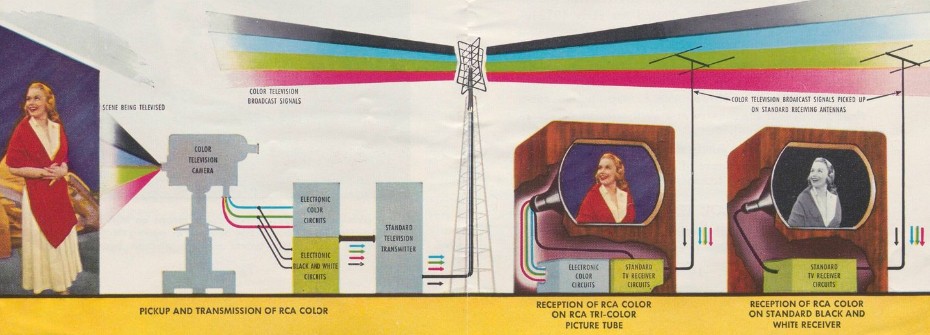
A simple graphic description of color television technology from a brochure titled “Facts about color television”, published by RCA in 1951.
Read the full brochure in the Hagley Digital Archives
Brochure in Hagley's Published Collections (Call number Pam 95.490)
RCA Color Monitor, 1953
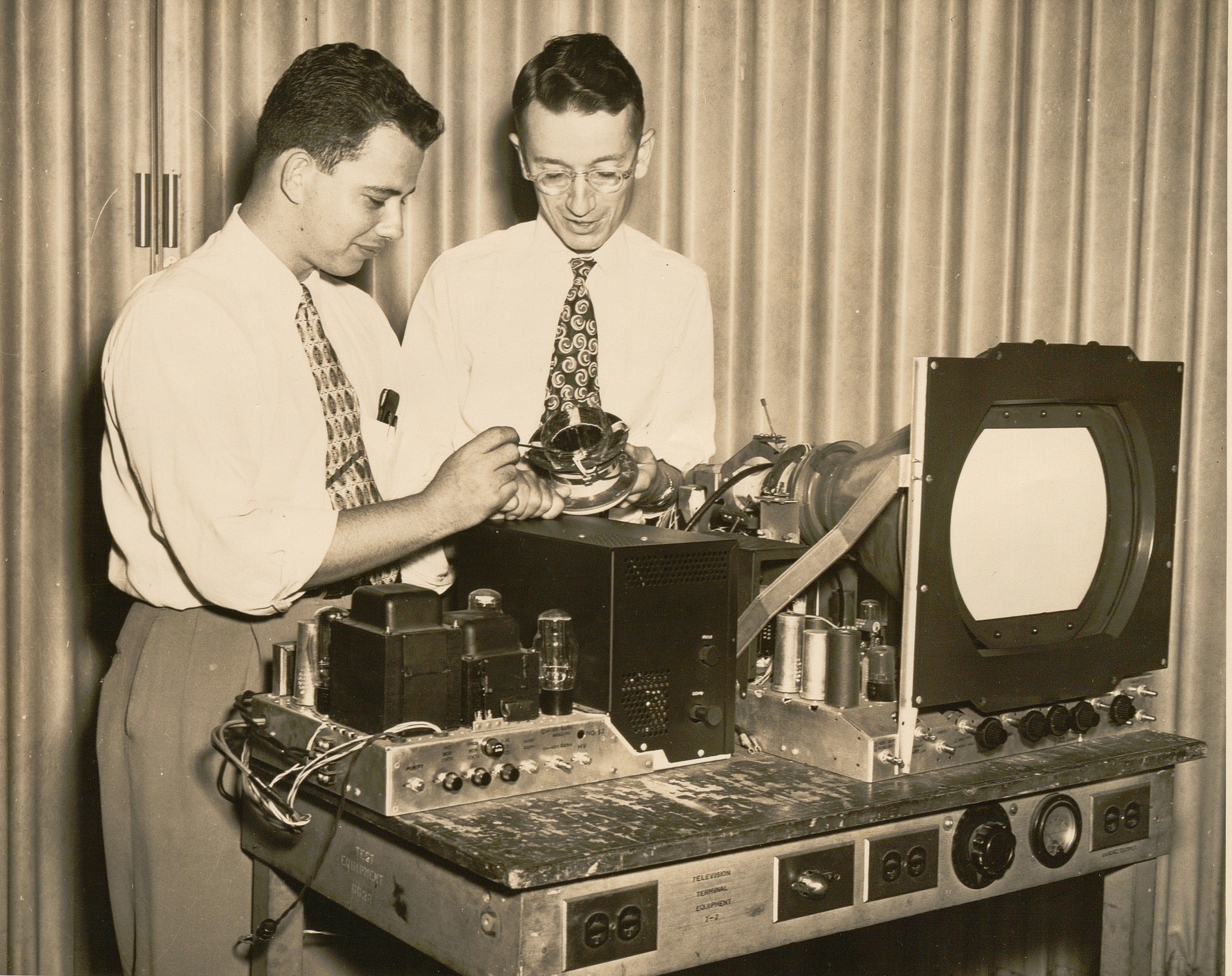
Harold J. Benzuly (left) and Fred L. Bechly (right) with the RCA Tri-color Kinescope Monitor. Color became the next big innovation in television in the mid-twentieth century. RCA engineers, including Fred Bechly, developed the tricolor kinescope. This device was RCA’s secret weapon against CBS as they competed to develop a standard for color television in the United States. View a series of photographs from RCA's All Electronic Color TV System.
Photograph from the Fred L. Bechly papers (Accession 2586)