Hagley Library recently acquired a new collection of published and archival materials pertaining to the history of American hotels. The acquisition is a gift from collector Larry R. Paul. Mr. Paul has gifted materials to Hagley in the past, adding a rich assortment of business history publications to the collection and providing access to a database he created with historical information on over 20,000 U.S. hotels, from the 18th century to the early 21st century.
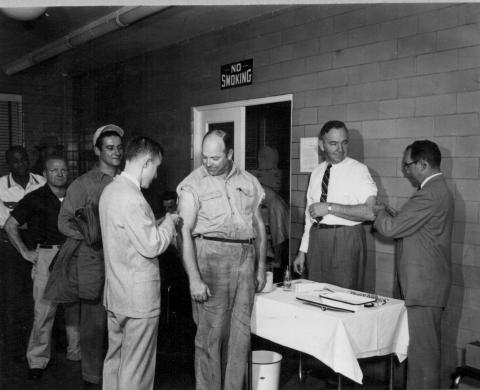
This week's Hagley Vault post is a little poke in the arm for all you procrastinators out there. This photograph, taken on November 7, 1957 shows employees of the Westinghouse Electric & Manufacturing Company's South Philadelphia Works lining up for flu shots at the company's dispensary. This photograph was taken by staff photographer Charles Yessel (1877-1953) for publication in the company’s newsletter, Machine News.
The Westinghouse Machine Company, which became the Westinghouse Electric Corporation in 1945, manufactured gas and steam engines, turbines and mechanical stokers for use in railway systems, fire service pumping stations, the shipping industry, and other large scale industrial purposes. The South Philadelphia Works was constructed from 1917 to 1919 as a steam turbine manufacturing plant.