
Image
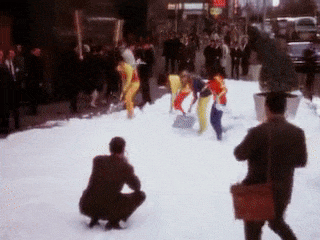
 Four women compete in a snow shoveling contest to promote the 1967 International Ski and Winter Sports Show in New York, New York. The two women using Teflon-S coated shovels win the contest.

Hagley Library will be closed this Monday, so we can shovel out from under the snow and ice like everyone else in the region. 

If any of you need any inspiration to get your own sidewalks cleared, here's a DuPont sponsored women's snow-shoveling contest, created to promote the company's Teflon-S fluoropolymer, used here to coat snow-shovels. The contest was cross-promoted with the 1967 International Ski and Winter Sports Show in New York City.
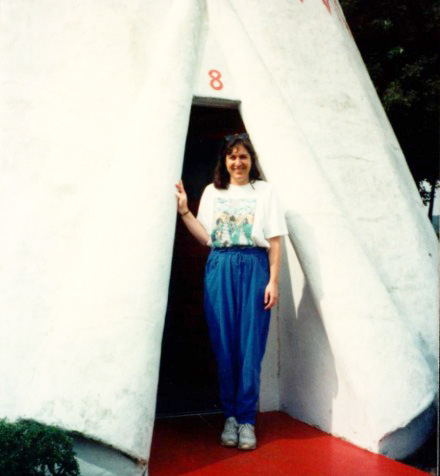
We wish our dear colleague Linda Gross heartfelt congratulations on her retirement at the end of 2025!Linda Gross Linda has been our Reference Librarian since September 2002. In those years, she has helped innumerable patrons, steered our ship of Interlibrary Loans, served on our grants committee, and provided a sharp editorial eye for our publications team.
As I write this, I am only one week into the New Year and still upholding my resolution to participate in “Dry January.” Non-alcoholic drinks such as flavored seltzers and sodas replace my usual nightcap of wine or whiskey. This inspired me to write about a patent model in our collection designed to help soda mixologists prepare similar alcohol-free concoctions. It was invented by John Matthews Jr. whose father was called the “Soda Fountain King” of New York City.

Image
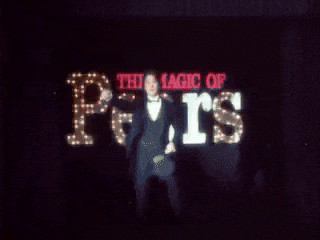
Intro to a magic-themed sponsored film about canned pears

On this day in 1825, the United States Patent and Trademark Office issued its first patent for a system to "preserve animal substances in tin". Ezra Dagget and his nephew Thomas Kensett, the patent holders, had been canning salmon, oysters and lobsters out of their seafood processing factory in New York City since 1819. 

Tin cans had been put into use for preserving food since 1813, but their use had largely been limited to specialized environments and circumstances like military expeditions and arctic exploration, rather than commercial use.

Hagley is pleased to announce the release of 40 newly digitized radio episodes of The Ohio Story. This scripted radio and television program was broadcast live to a network of stations across Ohio from 1947 to 1961. Running for 15 years, it is believed to be the longest-running regional scripted program in the United States.

From the morning hours on September 14, 1960, a mass of people stormed the newly opened glass pavilion on the Square of the October Revolution, the center of the working-class neighborhood Trešnjevka in Zagreb. Unlike the historical event that the square was named after, the revolution in question was of a different kind—the opening of the first self-service department store in the Croatian capital after the Second World War. The opening of the store was one of the events that kickstarted the spread of department stores based on the self-service system in large Yugoslav urban centers.

Image
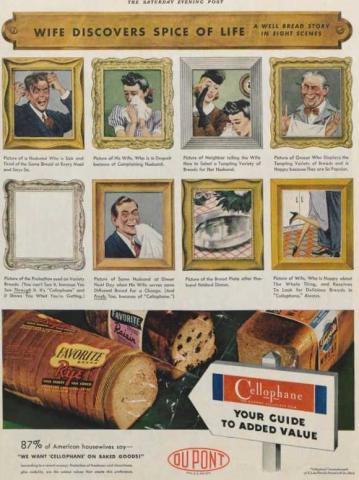
Advertisement using a comic strip format to promote a bread brand and the benefits of cellophane wrapping.

Usually we wouldn't recommend just casually searching the internet at work for things like "wife discovers the spice of life". But, as it turns out, it's just bread and cellophane.


This undated advertisement from DuPont promoted the company's cellophane. DuPont acquired U.S. patent rights in cellophane in 1923, but it was soon revealed that water vapor could penetrate the film. This fact precluded its use for food packaging.
DuPont scientist William Hale Charch (1898-1958) resolved this problem, and in 1927 a patent was issued for the moisture-proofing system. Cellophane continued to be highly profitable through the 1950s, but by the 1960s new products began replacing it. Cellophane production declined through the 1970s and early 1980s with DuPont discontinuing it in 1986.

Subscribe to