
New York City was the focus of the early American television industry. In TV’s early years NYC had the highest concentration of television sets, viewers, broadcasters, and infrastructure. In NYC many Americans had their first encounter with TV.
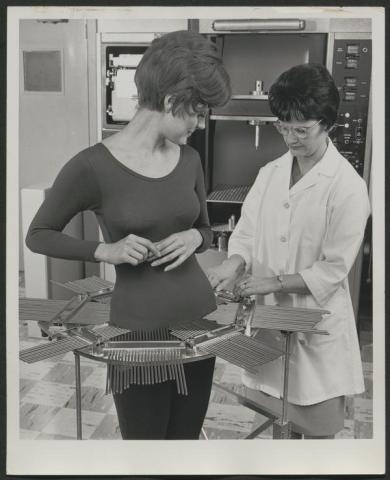
If you're feeling grateful for stretchy waistbands after the holidays, you have Dr. Joseph Shivers (1920-2014) to thank. Shivers began working for DuPont in 1946 as a researcher assigned to improving polymers.
He was soon tasked with a new project; DuPont's market research on what women consumers wanted from textile fabrics had spurred research into finding new, more comfortable materials to replace rubber for women's girdles and other foundation garments. The project initially stalled and was shelved in 1950, but found new life a few years later during an experiment into modifying Dacron, a polyester fabric invented in 1951.
The project was restarted, and the new material was completed in 1959 and released under the name Fibre K before being rebranded as Lycra, followed by Spandex.

