Image
3a764c0a6901a77c09840f0539798a61adf41cf4.jpg

"What do you want to do for lunch today?"

"Oh, I dunno. Something normal"

We're sharing this miraculous little concoction from ca. 1963 today as an apertif to our one of our newest collections in process, a historical archive from the renowned advertising agency of Batten, Barton, Durstine & Osborn Inc. (BBDO). The records cover the entire span of BBDO's existence, beginning with its founding as the George Batten Company in 1891. You can read more about this collection and what we're doing to make it accessible to researchers by clicking this link.

William Henry Radebaugh (1909-1996), was a public relations executive at the DuPont Company for over twenty years. He wrote, produced and directed many films about the company during his tenure there and for several years after his retirement.He began his career in public relations and in 1942, founded and was executive director of, the South Jersey Manufacturer's Association in Camden, New Jersey. Radebaugh then took a position at the DuPont Company as a public relations consultant in 1952. He later became the Director of Public Relations for the Textile Fibers Department.

Image
f28e6eaabbc9737c0318176a69247ffd974fbe4d.jpg

This #WorkerWednesday, we're making a visit to the Camphor Plantof E.I. du Pont de Nemours & Company's Chambers Worksfacility.

The site, located on the Delaware River in Deepwater Point, New Jersey, was established by the DuPont Company in 1892 for the purpose of manufacturing gunpowder. Between then and when it closed in 2018, the site was used to develop, manufacture, and store a wide variety of chemical products, including Kevlar, nylon, Freon, leaded gasoline, and uranium processing for the Manhattan Project.

Camphor, an aromatic compound produced from the wood of camphor producing plants, or synthetically derived from turpentine, is a versatile product used in mothballs, embalming fluids, perfumes, medicinal products and, in the early years of the plastics industry, as a plasticizer used in the manufacturing of celluloid and plastic lacquers.

Image
5b347357077051e24c10a92de58e6aed38641860.jpg

March 23rd is National Agriculture Day, and has been since 1973, when the date was established alongside its sponsor, the Agriculture Council of America. But prior to National Ag Day, we had u2018Tommy Looks at Farming', a ca. 1962 comic produced by the B.F. Goodrich Companyto inform young people about "the vital role of agriculture in our health, economy, and security" and, of course, the importance of B.F. Goodrich Company products to that system.

This comic is Pam 2017.0810 in Hagley Library's Published Collections, and is included in a collection of other promotional comic books in our Digital Archive. The items in this digital collection offer a selection of the promotional comic books held in our collection.

Image
ba88c3ecdcb4b8c6cfdb43bfcc7ce9ffd6d83acb.jpg

This #MotorMonday finds a new kind of car at the end of the rainbow; the Nash 600. This model was the first mass-produced American car featuring unibody construction. Pioneered by European manufacturers like Lambda in the early 1920s, unibody construction consisted of a manufacturing design in which the body of the vehicle, its floor plan, and its chassis all form a single structure. This allowed for a lighter vehicle with better fuel economy, as well as a vehicle that was able to absorb crash impacts more safely for passengers.

image

This approach to automobile construction would later become common among American automobile manufacturers, as would seat-belts, which Nash begin including in 1949, making them an early adopter of this technology as well. Nash's innovative 1936 u2018Bed-in-Car' system, however, yet remains to achieve the widespread acclaim of its other achievements.

Image
52243576f5026820a78f9b00a707750f21e61b41.jpg

This #WorkerWednesday, we're paying a visit to the staff of the furnace and cupola in the Westinghouse Machine Company's Melting Department foundry at the South Philadelphia Works in Essington and Lester, Pennsylvania.

The Westinghouse Machine Company, which became the Westinghouse Electric Corporation in 1945, manufactured gas and steam engines, turbines and mechanical stokers for use in railway systems, fire service pumping stations, the shipping industry, and other large scale industrial purposes. These foundry workers were photographed by company photographer Charles Yessel on May 12, 1920, for the company's newsletter, Machine News.

Image
b52f1e8ea314417f553cffc5b4382f0e1c7b5b35.jpg

In 1924, Colonel J. (John) Victor Dallin (1897-1991)founded the Dallin Aerial Surveys Company. Dallin was a Royal Flying Corps-trained pilot who served in World War One; in the latter stages of the war, he was sent on aerial photography service forreconnaissance missions.

After the war, in 1919, he put that experience to use when joined Bishop and Barker, a firm which did some aerial survey work. In the 1920s, he worked at the Philadelphia Aero Service Corporation, which operated a flying school in South Philadelphia. In 1924, he left to establish his own company and started Dallin Aerial Surveys as a single proprietorship.

Dallin Aerial Surveys produced photographs like this image of Center City Philadelphia, featuring City Hall, which was taken at 5:40 A.M. on June 24, 1934. Its clients included newspapers, businesses, municipalities, and private individuals, who contracted with the company for aerial images of factories, private estates, schools, country clubs, towns, airports, rivers, and newsworthy sites and events.

Image
10fe63d3fbdff4141f2ce45cadcf8f80111863b7.jpg

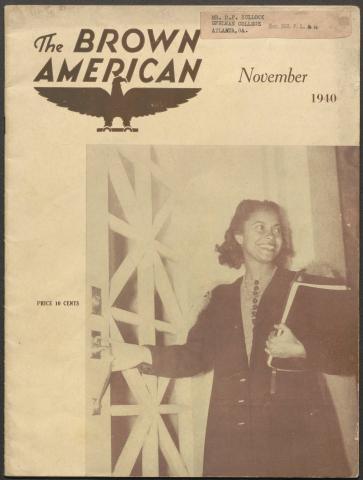
International Women's Day is being observed around the world today. The tradition dates back to February 28, 1909, when the Socialist Party of America, acting on the suggestion of party member Theresa Malkiel, held a "National Woman's Day" in New York City.

The following year, the observance was adopted by the International Socialist Women's Conference. In the ensuing years, activists for women's suffrage and other equal rights adopted the date in nations such as Australia, Denmark, Switzerland, and Germany, though the date varied from nation to nation and was sometimes celebrated as the Women's International Day of Struggle or by other names. However, the observance became most strongly associated with communist nations and the international communist movement; it was officially adopted by the Soviet Union in 1917 and the People's Republic of China in 1949.

Subscribe to